Ten Banks Will Close Your Account Before You Ever See the Fee Schedule
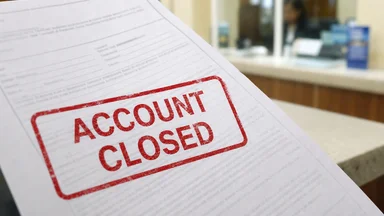
You walk into a bank branch, deposit a modest paycheck, and walk out believing you have a working checking account. Weeks later, a letter arrives: your account has been closed. No explanation, no appeal. The fee schedule you never saw might as well have been written in invisible ink. This is not an edge case. It is a feature of how retail banks manage their deposit books, and it hits the smallest customers hardest.
The Fine Print That Closes Doors
Banks frame early account closures as risk management. A customer who opens an account with $100 and withdraws most of it within a week looks like a potential fraud vector. The bank's algorithms flag the pattern, and the account is frozen before the customer ever sees a monthly statement. But the real risk is often not fraud—it's unprofitability.
Retail banks operate on thin margins for small deposits. The cost of servicing a checking account—statements, fraud monitoring, branch access, customer service—can exceed the interest spread on a $200 balance. When a customer fails to maintain a minimum balance, the bank loses money on that relationship. Rather than charge a fee that would drive the customer away, many banks simply close the account and return the balance by check.
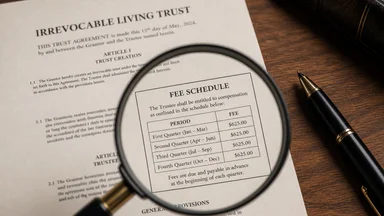
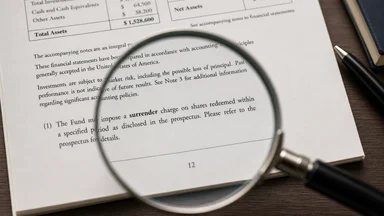
The fee schedule itself is often hidden until after the account is opened. Some banks include it in the terms and conditions, but the document is long, dense, and rarely read. Others provide a summary at account opening but bury the closure penalty in a footnote. A 2024 survey by the Consumer Financial Protection Bureau found that roughly one in five bank customers were unaware of their account's monthly maintenance fee until they were charged for it.
Banks call this prudent underwriting. Customers call it a trap. The asymmetry is stark: the bank has full visibility into your transaction history and balance, while you have only a vague promise of "low fees" or "free checking." When the account is closed, the bank incurs a small administrative cost; the customer may face bounced checks, late bill payments, and a credit report ding.
Who Gets Closed Out and Why
Not all customers are treated equally. Banks segment depositors by profitability, and the bottom tier—accounts with average balances below $500, frequent small withdrawals, or multiple currency transactions—are the most likely to be flagged for closure. A 2023 study by the Federal Reserve Bank of Philadelphia found that accounts with balances under $250 were three times more likely to be closed within the first year than accounts with balances over $1,000.
Rapid deposit-and-withdraw patterns set off alarms. If you deposit a paycheck on Friday and withdraw most of it by Monday, the bank sees volatility, not loyalty. This pattern, common among hourly workers who live paycheck to paycheck, triggers automated risk models. The bank may place a hold on the deposit or, after a few cycles, close the account entirely.
Multiple currency transactions are another red flag. Banks that offer multi-currency accounts often charge conversion spreads of 1–3%. But if a customer frequently converts small amounts—say, $50 at a time—the transaction cost to the bank can exceed the spread. Rather than raise the minimum conversion amount, some banks simply close the account and advise the customer to use a specialized currency exchange service.
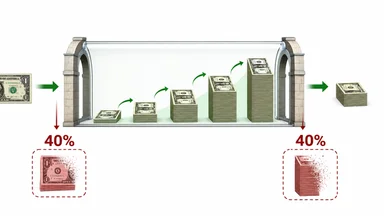
The logic is similar to the "haircut" concept in finance. In collateralized lending, a haircut is the discount applied to an asset's value to account for risk. Banks apply an implicit haircut to small deposits: they treat the balance as less valuable than its face amount because of the volatility and servicing cost. A $200 balance with high transaction volume may be valued at effectively zero for profitability purposes.
Another group that faces disproportionate closure risk is college students. Many students open accounts with minimal balances, often depositing just enough to avoid fees—say, $25 to $50—and then use the account for small daily purchases. Banks have begun targeting these accounts for closure after a few months of low activity or repeated small withdrawals. In 2025, a class-action lawsuit was filed against a major national bank alleging that it systematically closed student accounts without adequate notice, leaving thousands unable to access funds during exam periods. The bank settled without admitting fault, but the pattern persists.
Immigrants and non-residents also face higher scrutiny. Banks often require a minimum balance or direct deposit to keep an account active, but newcomers may not have a steady income stream. A 2022 report by the National Consumer Law Center highlighted cases where banks closed accounts of foreign students after they failed to maintain a $1,500 minimum balance—even though the students had been assured at account opening that no minimum was required. The fine print, buried in the terms, stated that the minimum could be imposed at the bank's discretion.
The Fee Tiers You Never See
Even if your account stays open, the fee structure can quietly drain it. Monthly maintenance fees range from $5 to $15 at most large banks, though some waive them with a minimum balance of $1,500 or more. Overdraft fees, which averaged roughly $30 per incident as of early 2025, are the most lucrative penalty for banks—collectively generating around $15 billion annually in the United States.
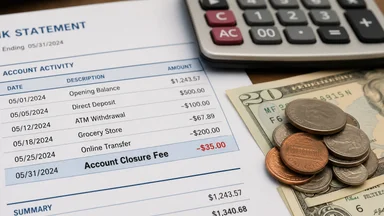
Foreign transaction fees add 1–3% to every purchase made abroad or online with a foreign merchant. Inactivity fees, typically $5–10 per month, kick in after six to twelve months of no transactions. And if you decide to close the account yourself, the bank may charge a closure fee of $25 to $50, often deducted from the remaining balance.
These fees are disclosed in the account agreement, but the disclosure is rarely transparent. A recent analysis found that fourteen banks charge an account closure fee that exceeds the average monthly balance of their lowest-tier customers. In other words, the cost of leaving is higher than the cost of staying—if you have any money left to stay with.
The cumulative effect is regressive. Low-income account holders, who are more likely to incur overdrafts and maintain low balances, pay a much higher percentage of their income in bank fees than wealthier customers. A 2022 study by the Pew Charitable Trusts estimated that households earning under $30,000 per year spend roughly 5–10% of their account balance on fees annually, compared to less than 1% for households earning over $100,000.
Consider a concrete example: Maria, a part-time retail worker in Ohio, maintains an average checking balance of $400. Her bank charges a $12 monthly maintenance fee unless she maintains $1,500. She doesn't, so she pays $144 per year in maintenance fees. She also incurs two overdraft fees per year at $30 each, totaling $60. Add a $35 closure fee when she finally decides to switch banks. That's $239 in fees on a $400 balance—a 60% effective annual cost. Meanwhile, a customer with a $5,000 balance at the same bank pays no maintenance fee (waived) and rarely overdrafts, keeping annual fees near zero.
How Banks Profit from Early Closures
When a bank closes your account, it does not simply return your money. The process creates several revenue streams. First, any unclaimed balance—if you fail to cash the final check or if the bank cannot locate you—eventually becomes escheated property, turned over to the state after a dormancy period. While the state holds the funds in trust, the bank no longer carries the liability, freeing up regulatory capital for lending.
Second, closed accounts still generate data. Banks sell anonymized transaction data to third-party marketers and credit bureaus. Even after closure, your transaction history—aggregated with thousands of others—helps train risk models and target financial products. You have no say in this secondary market; the account agreement typically grants broad data usage rights.
Third, reopening fees double-dip. Some banks charge a fee to reinstate a closed account, often $25–50, even if the closure was the bank's decision. If you want to keep banking with the same institution, you may have to pay for the privilege of being a customer again. This practice is less common at online banks and credit unions, but it persists at many large brick-and-mortar institutions.
The regulatory capital angle is subtle but important. Banks are required to hold capital against deposits, especially volatile ones. By closing low-balance, high-churn accounts, banks reduce their deposit base and the associated capital requirement. The freed-up capital can then be deployed into higher-yielding loans. In effect, the smallest depositors are pruned to make the balance sheet more efficient for the bank—and less inclusive for the customer.
But there is a counter-argument: banks argue that closing unprofitable accounts allows them to offer better terms to the majority of customers. If every small account were subsidized, they claim, fees would have to rise across the board. This is the same logic that airlines use for overbooking and that streaming services use for price tiers. Whether you find it persuasive depends on whether you believe banking is a public utility or a private business. The reality is that banks are for-profit entities, and they will optimize for profit. The question is whether regulation should force them to serve all customers equally.
Parallels in Securities Trading: The Ants and Margin Calls
There is a parallel in securities trading. In July 2026, MarketWatch reported that 1.2 million South Korean retail traders—known colloquially as "the ants"—were hit with margin calls after a market downturn. That is more than 3% of the country's adult population, illustrating the danger of leverage and the speed with which small participants can be forced out.
Bank account closures operate on a similar principle. The bank, like a broker, sets thresholds for acceptable behavior. When a customer falls below those thresholds—too low a balance, too many transactions, too little profitability—the bank issues a "margin call" in the form of fees or a closure notice. The small depositor, like the retail trader, often lacks the information or resources to comply.
In both cases, the system is designed to protect the institution, not the individual. The bank's risk models treat small depositors as high-volatility liabilities, much as a broker treats a thinly capitalized trader as a credit risk. The result is that the people who can least afford to lose access to banking are the most likely to be shut out.
The comparison is not perfect. Margin calls are explicit and regulated; bank closures are often opaque and discretionary. But the underlying economic logic is the same: when the cost of serving a customer exceeds the revenue that customer generates, the relationship ends—often with little warning and no recourse.
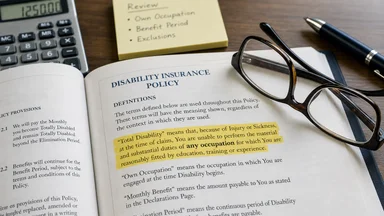
Another parallel can be found in the insurance industry. Insurers routinely non-renew policies for customers who file too many claims, even small ones. The practice is called "use it and lose it." Similarly, banks monitor transaction patterns and close accounts that generate high servicing costs relative to balance. Both industries rely on actuarial models that treat small customers as unprofitable risks. The difference is that insurance non-renewal is regulated and often subject to appeal, while bank account closures are largely at the bank's discretion.
What Hidden Fees Actually Cost You
Add up the potential charges, and the numbers are sobering. The median American household pays an estimated $200–300 per year in bank fees, according to a 2023 analysis by Bankrate. For a household earning $50,000, that is roughly 0.5% of income. But for households in the bottom income quintile, the percentage is much higher—some estimates put it at 5–10% of their average account balance.
Overdraft fees alone account for the bulk of these costs. The Consumer Financial Protection Bureau reported that in 2023, banks collected over $15 billion in overdraft and nonsufficient-funds fees. A single overdraft can trigger multiple fees if the transaction is reattempted, and some banks charge a "sustained overdraft" fee if the account remains negative for more than a few days.
Hidden costs also include lost interest. The average savings account pays roughly 0.5% APY as of mid-2025, while the average checking account pays near zero. Meanwhile, the fees you pay effectively negate any interest earned. A person maintaining a $500 balance in a checking account with a $10 monthly maintenance fee loses 24% of their balance per year—far more than any interest they could earn in a high-yield account.
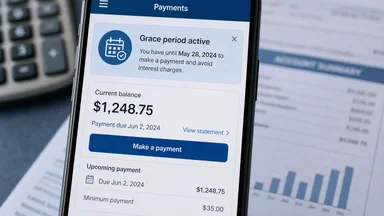
The interest calculation on credit cards follows a similarly punishing logic: a single partial repayment can trigger interest on the full balance. Bank account fees operate with the same opacity. The fee schedule is available, but the real cost—the probability of incurring each fee, the triggers, the cumulative impact—is not disclosed in any standardized way.
There is also the cost of switching. If your account is closed, you may need to open a new account elsewhere, which can involve credit checks, minimum deposit requirements, and time spent updating direct deposit and automatic bill pay. A 2024 survey by J.D. Power found that consumers who had an account closed spent an average of six hours resolving the issue—time that could have been spent working or with family. For hourly workers, that's lost wages on top of lost banking access.
Three Ways to Keep Your Account Open
First, maintain a minimum balance above $500. This is the threshold most banks use to waive monthly fees and avoid closure flags. If you cannot keep that much in a checking account, consider a credit union or an online bank. Many online banks have no minimum balance requirements and charge no monthly fees, precisely because their lower overhead allows them to profit from small accounts.
Second, avoid rapid in-and-out transactions. If you need to move money frequently, use a dedicated savings account for deposits and transfer only what you need for immediate expenses. This reduces the volatility that triggers risk models. Setting up direct deposit also signals stability; banks are less likely to close an account with a recurring payroll credit.
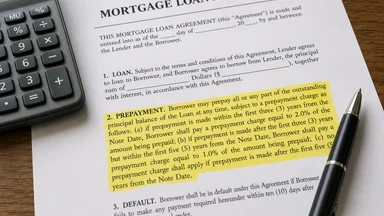
Third, read the fee schedule before signing. Yes, it is tedious. But look specifically for: monthly maintenance fees and how to waive them, overdraft and nonsufficient-funds fees, foreign transaction fees, inactivity fees, and account closure fees. If the bank does not provide a clear summary, ask a representative to explain the conditions under which fees are charged. If they cannot or will not, that is a red flag.
Finally, consider alternatives. Credit unions are not-for-profit and typically have lower fees. Online banks often offer free checking with no minimums and reimburse ATM fees. A payday lender's fee structure is a cautionary tale of how high-cost alternatives can trap the unwary; the same vigilance applies to bank accounts. Do not assume that a big name means fair treatment.
But there is a trade-off: online banks may lack physical branches, which can be a problem if you need to deposit cash or speak to a teller. Some credit unions have membership restrictions based on geography or employer. And even the best online banks can close accounts if they deem you unprofitable—though they are less likely to do so because their cost structure is lower. The key is to match your banking needs to the institution's business model. If you have a low balance and high transaction volume, look for a bank that explicitly caters to that profile, such as a fintech app or a community development credit union.
This article is for informational purposes only and does not constitute personalized financial advice. Account terms vary by institution and jurisdiction. Always review the full account agreement before opening a new account.