Hypertension Algorithm Recommends One Drug While Patient’s Kidney Reads Another
For millions of people with chronic kidney disease, the standard first-line treatment for hypertension—a thiazide diuretic—may be working against them. The guideline says one thing; the kidney reads another. This disconnect, long recognized by nephrologists but often overlooked in primary care, contributes to persistently high blood pressure and elevated cardiovascular risk in a population that can least afford it.
The Guideline Says One Thing, the Kidney Another
Major hypertension guidelines from the American Heart Association and the European Society of Cardiology recommend thiazide or thiazide-like diuretics as first-line therapy for most patients with high blood pressure. The logic is straightforward: thiazides block sodium reabsorption in the distal convoluted tubule of the kidney, reducing fluid volume and lowering blood pressure. In patients with normal kidney function, this works reliably.
But in chronic kidney disease (CKD), the kidney is not normal. As nephrons are lost, the remaining nephrons undergo compensatory hypertrophy and increase sodium reabsorption in the proximal tubule and the loop of Henle. This adaptive response overwhelms the distal blockade that thiazides provide. The result is a blunted antihypertensive effect. Dr. Mahboob Rahman, a hypertension researcher at the University of Michigan, has called this a “blind spot” in guideline-driven care.
Studies suggest that in patients with an estimated glomerular filtration rate (eGFR) below 30 mL/min, thiazide monotherapy often fails to achieve target blood pressure. Yet many primary care clinicians, following stepped-care algorithms, continue to escalate thiazide doses or add a second agent before considering a loop diuretic—which targets the loop of Henle, where the compensatory reabsorption is actually happening.
The mismatch is not trivial. Roughly 1 in 7 US adults has CKD, and the majority have hypertension. Uncontrolled blood pressure accelerates kidney function decline and dramatically raises the risk of heart failure, stroke, and cardiovascular death. For these patients, the algorithm is not just ineffective; it may be harmful.
How the Kidney’s Sodium Sieve Rewrites the Prescription
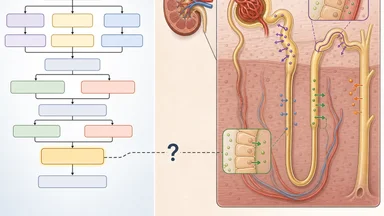
To understand the mismatch, it helps to trace sodium’s journey through the nephron. In a healthy kidney, about 60–70% of filtered sodium is reabsorbed in the proximal tubule, 25% in the loop of Henle, and about 5% in the distal convoluted tubule via the sodium-chloride cotransporter (NCC)—the target of thiazides. The remaining 2–3% is lost in urine.
In CKD, as nephron mass declines, each remaining nephron handles a larger sodium load. The proximal tubule and the thick ascending limb of the loop of Henle ramp up reabsorption to conserve sodium. This compensatory increase means that less sodium reaches the distal tubule. With less sodium available for the NCC to block, thiazides have a diminished effect.
Loop diuretics, such as furosemide, target the Na-K-2Cl cotransporter in the thick ascending limb—where the compensatory reabsorption is concentrated. They are more effective in CKD, but they require careful dosing and monitoring. Mineralocorticoid receptor antagonists (MRAs), such as spironolactone, also have a role, but they carry a risk of hyperkalemia, especially when eGFR is low.
Despite this physiology, guidelines have been slow to differentiate. The 2017 ACC/AHA guideline mentions that thiazides lose efficacy in advanced CKD but still lists them as first-line, with loop diuretics relegated to a second- or third-line option. The 2024 KDIGO guideline for CKD management does recommend loop diuretics for edema control but is less explicit about their use for hypertension alone.
“The kidney is not just a passive filter; it actively rewrites the prescription,” says Dr. Raymond Townsend, a nephrologist and hypertension specialist at the University of Pennsylvania. “If you don’t account for that, you’re guessing.”
The SPRINT Trial’s Unfinished Business
The landmark SPRINT trial, published in 2015, demonstrated that intensive blood pressure lowering (systolic target < 120 mmHg) reduced cardiovascular events and all-cause mortality compared with standard treatment (< 140 mmHg). But SPRINT excluded patients with eGFR < 30 mL/min, and only about 28% of participants had CKD (eGFR 30–59 mL/min).
Post-hoc analyses of SPRINT have suggested that the CKD subgroup derived similar benefit from intensive treatment, but the diuretic regimens were not standardized. Many patients in the intensive arm received a thiazide as part of a multidrug regimen. Whether a loop diuretic would have been more effective in the CKD subgroup remains unknown.
No prospective trial has directly compared thiazide-based versus loop-diuretic-based strategies for hypertension in advanced CKD. The absence of such data means that guidelines are based on extrapolation from non-CKD populations—a risky approach when the underlying physiology is fundamentally different.
“We need a trial that randomizes CKD patients to a thiazide-first versus a loop-diuretic-first strategy and follows them for hard outcomes,” says Dr. Mahboob Rahman. “Until then, we’re flying partially blind.”
The CREDENCE trial, which tested canagliflozin in CKD, and the DAPA-CKD trial with dapagliflozin, both showed cardiovascular and kidney benefits of SGLT2 inhibitors, which also have a mild diuretic effect. But SGLT2 inhibitors are not a replacement for loop diuretics in volume-overloaded patients. The interplay between drug classes adds further complexity to the algorithm.
When Algorithm Meets Real-World Creatinine
In practice, the guideline-recommended step-care approach often leads to suboptimal outcomes. A 2026 study in JAMA Internal Medicine found that among patients with CKD stage 4–5 and hypertension, roughly 40% were prescribed a non-loop diuretic—mostly thiazides—as their primary antihypertensive agent. Ambulatory blood pressure monitoring in a subset revealed that many had masked uncontrolled hypertension, with daytime systolic readings exceeding 140 mmHg despite clinic readings that appeared controlled.
Primary care clinicians, who manage the majority of hypertension, often follow algorithms that do not differentiate by CKD stage. The algorithm says “start thiazide,” and they do. If blood pressure remains high, they add an ACE inhibitor or ARB, then a calcium channel blocker, and only later consider a loop diuretic—by which time the patient may have accumulated years of suboptimal control.
Nephrology referral is often delayed until eGFR falls below 30 mL/min, by which point kidney damage is advanced. Earlier referral could allow for tailored diuretic selection, but the shortage of nephrologists in many regions makes this difficult. In rural areas, patients may never see a nephrologist at all.
“The system is designed for the average patient, not the CKD patient,” says Dr. Raymond Townsend. “But the average patient doesn’t have CKD. So we need to adapt.”
The Emerging Precision: Biomarkers Beyond Creatinine
Several biomarkers could help guide diuretic choice in CKD, but they are not yet part of routine hypertension panels. Plasma renin activity (PRA) and aldosterone levels can help distinguish volume-dependent from renin-dependent hypertension. In CKD, volume overload is common, so a low-renin state might predict better response to a diuretic, while a high-renin state might favor an ACE inhibitor or ARB.
Urine sodium-to-potassium ratio is another candidate. A low ratio suggests high aldosterone activity and might predict a good response to an MRA. A high ratio might indicate that a loop diuretic is needed. Genetic variants in the NCC gene (SLC12A3) can modulate thiazide sensitivity, but testing is not widely available.
Dr. Townsend and others have advocated for point-of-care renin testing, which could be done in the clinic with a fingerstick. “If we could measure renin in 10 minutes, we could tailor the first prescription,” he says. “That would be a game-changer—but it’s not here yet.”
The challenge is that adding these tests to routine care would increase upfront costs. But the potential savings from avoiding years of uncontrolled hypertension and its complications—dialysis, heart failure hospitalizations, stroke—could be substantial. Health systems are beginning to explore value-based care models that might support such precision approaches.
Until then, clinicians must rely on clinical judgment and a careful assessment of volume status, which is more art than science. Pitting edema, jugular venous distension, and a history of heart failure can point toward volume overload and a need for loop diuretics. But these signs are often absent in early CKD.
A Practical Path for the Clinician
For clinicians managing hypertension in CKD, several practical steps can help bridge the gap between guidelines and physiology. For patients with CKD stage 3b (eGFR 30–44 mL/min) or worse, starting with a low-dose loop diuretic—such as furosemide 20–40 mg once or twice daily—may be more effective than a thiazide. If edema is present, the dose may need to be higher.
Adding an MRA, such as spironolactone 12.5–25 mg daily, can further reduce blood pressure, but potassium and eGFR must be monitored closely. If potassium rises above 5.5 mEq/L or eGFR drops, the MRA should be reduced or stopped. The combination of a loop diuretic and an MRA can be synergistic, but it requires careful follow-up.
Thiazide monotherapy should generally be avoided in stage 4–5 CKD. If a thiazide is used, it should be combined with a loop diuretic or switched entirely. Ambulatory blood pressure monitoring (ABPM) is strongly recommended to confirm control, as office readings can be misleading. The target blood pressure should be < 130/80 mmHg, but orthostatic hypotension is a risk, especially in older adults or those on multiple agents.
“The key is to think about the kidney’s physiology, not just the algorithm,” says Dr. Rahman. “If the blood pressure isn’t responding to a thiazide, don’t just add another drug—ask why.”
For patients with CKD and hypertension, the stakes are high. Cardiovascular death risk rises steeply with each 10 mmHg increase in systolic blood pressure. A tailored approach could prevent thousands of events each year.
Why This Mismatch Matters Now
Hypertension in CKD affects roughly 1 in 7 US adults, and the prevalence is rising as the population ages and diabetes becomes more common. Cardiovascular disease is the leading cause of death in CKD, and uncontrolled blood pressure is a major driver. The current guideline update cycle of every 3–5 years means that new evidence takes years to reach the bedside.
Meanwhile, new drug classes add complexity. SGLT2 inhibitors, such as dapagliflozin and empagliflozin, have been shown to reduce kidney failure and cardiovascular events in CKD, and they have a mild diuretic effect. But they are not a substitute for loop diuretics in volume-overloaded patients. The algorithm must now account for multiple drug classes with overlapping but distinct mechanisms.
“The algorithm should adapt to the organ, not the other way around,” says Dr. Townsend. “We have the tools to do better. We just need to use them.”
The mismatch between guideline recommendations and kidney physiology is a reminder that medicine is not one-size-fits-all. For patients with CKD, the standard first-line diuretic may be the wrong choice. A more nuanced approach—guided by biomarkers, volume status, and kidney function—could save lives.
Trade-offs and Counter-Arguments
Not all experts agree that loop diuretics should replace thiazides in CKD. Some argue that thiazides can still be effective at higher doses—for example, chlorthalidone 25–50 mg daily has shown efficacy in some CKD studies, though it increases the risk of electrolyte disturbances. A 2024 meta-analysis in the American Journal of Kidney Diseases found that thiazides lowered blood pressure in CKD stage 3 but had minimal effect in stage 4–5, supporting a stage-based approach rather than a blanket switch.
Cost and availability also matter. Thiazides are inexpensive and widely available, while loop diuretics require more frequent dosing and monitoring. In low-resource settings, a thiazide may be the only diuretic option, and clinicians must work within those constraints. The WHO Essential Medicines List includes both thiazides and furosemide, but supply chains vary.
Another counterpoint: some patients with CKD have predominantly renin-dependent hypertension, especially if they have diabetic nephropathy. In these patients, an ACE inhibitor or ARB may be more appropriate than any diuretic. The key is to assess the individual physiology rather than defaulting to a one-size-fits-all algorithm.
Dr. Rahman acknowledges these nuances: “We’re not saying never use a thiazide in CKD. We’re saying think about why you’re using it and whether it’s working. If it’s not, don’t keep escalating—reassess.”
Future research should focus on pragmatic trials that compare treatment strategies in real-world CKD populations, including those with comorbidities like heart failure and diabetes. Until then, clinicians must balance guideline recommendations with individual patient characteristics.
Global Perspectives: The Mismatch in Low- and Middle-Income Countries
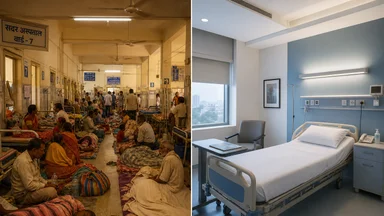
The mismatch between guidelines and kidney physiology takes on a different dimension in low- and middle-income countries (LMICs), where CKD prevalence is often higher due to untreated hypertension, diabetes, and infectious causes such as glomerulonephritis. In sub-Saharan Africa, for example, hypertension affects roughly 30% of adults, and CKD prevalence is estimated at 10–15%, yet access to both diagnostic tools and second-line medications is limited.
In many public health systems, thiazide diuretics are the default first-line antihypertensive because they are cheap and stocked in most clinics. Loop diuretics like furosemide are available but often reserved for heart failure or edema. The concept of tailoring diuretic choice based on eGFR or volume status is rarely taught in primary care training. As a result, patients with advanced CKD may remain on thiazide monotherapy for years, with blood pressure uncontrolled and kidney function declining.
Dr. John Ogutu, a nephrologist at the Kenyatta National Hospital in Nairobi, describes the challenge: “We see patients who have been on hydrochlorothiazide for five years with a creatinine of 3 mg/dL. No one has checked whether it’s working. When we switch to furosemide, their blood pressure improves within weeks. But we can’t do that for everyone—we don’t have enough nephrologists, and the supply of loop diuretics is inconsistent.”
Ambulatory blood pressure monitoring, which is recommended for confirming control, is rarely available outside of tertiary centers. The reliance on office readings, which can be falsely low in CKD patients due to diurnal variation, means that uncontrolled hypertension often goes undetected. A 2022 study in Kenya found that among CKD patients on antihypertensives, nearly half had masked uncontrolled hypertension on ABPM, despite clinic readings below 140/90 mmHg.
The solution in LMICs may not be more complex guidelines, but rather simple decision-support tools that integrate eGFR and volume status into prescribing algorithms. For example, the WHO’s HEARTS technical package for hypertension management includes a simplified algorithm that recommends loop diuretics for patients with eGFR below 30 mL/min or with edema. However, implementation remains patchy.
“We need to adapt the global guidelines to local realities,” says Dr. Ogutu. “A one-size-fits-all algorithm doesn’t work for a patient in a rural clinic who has no access to electrolytes or ABPM. But we can teach clinicians to check creatinine and look for edema—that alone would make a huge difference.”
The mismatch is thus not only physiological but also systemic. In high-income settings, the barrier is often inertia in guideline adoption; in LMICs, it is lack of resources and training. Both need to be addressed to close the gap.
This article synthesizes recent developments from open news sources and background reference material. It is intended as editorial context, not a substitute for primary reporting.