Zambian Stroke Patients Miss Thrombolysis Window as CT Scanners Sit in Customs
On a Tuesday morning in Lusaka, a 58-year-old man with known hypertension collapses at a market stall. Bystanders rush him to the University Teaching Hospital (UTH), the country's largest public referral centre. The emergency team suspects acute stroke, but without a functioning CT scanner, they cannot tell whether the cause is a blocked artery or a ruptured vessel. The clock is ticking—the window for thrombolysis is 4.5 hours from symptom onset. By the time a private scan is arranged at a cost of roughly US$ 150, the window has closed. The patient receives aspirin and supportive care, but the uncertainty about the stroke type means the treatment is a gamble.
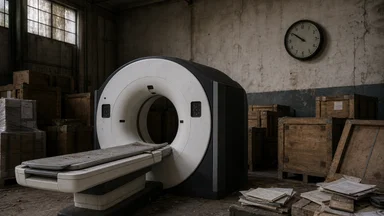
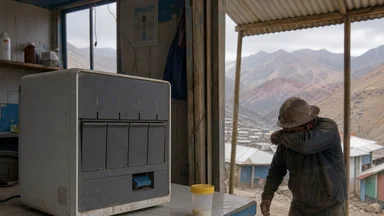
This scenario plays out repeatedly at UTH, which admits an estimated 200 acute stroke patients each year. Zambia's only public CT scanner designated for stroke diagnosis has been sitting in customs for 14 months, awaiting clearance. The delay is not unique—a second scanner ordered by the Ministry of Health in 2024 arrived at Dar es Salaam port and remained stuck for eight months due to a customs classification dispute. A third scanner, donated by a non-governmental organisation, arrived in July 2024 and only reached the radiology department in February 2025 after a prolonged duty waiver process. Meanwhile, stroke patients continue to arrive at emergency rooms where clinicians work blind.
A Stroke Patient's Clock Starts Ticking Before the Ambulance Arrives
For ischemic stroke, the standard of care is intravenous alteplase administered within 4.5 hours of symptom onset. But before giving alteplase, guidelines require a non-contrast CT head to rule out intracranial haemorrhage, which would contraindicate the drug. In Zambia, that imaging step has become the rate-limiting factor. Without a functional CT scanner at UTH, the differential between haemorrhagic and ischaemic stroke cannot be resolved, and alteplase cannot be given.
Clinicians at UTH describe a workaround: they transfer patients to private radiology centres, but each scan costs roughly US$ 150—more than the median monthly household income in Lusaka. Many families cannot afford it. Some patients are sent home with a clinical diagnosis alone, and aspirin is prescribed empirically. Aspirin is effective in ischaemic stroke but can worsen haemorrhagic stroke by increasing bleeding risk. Without imaging, the decision is a blind choice.
The 4.5-hour window is already tight even in well-resourced settings. In Zambia, additional delays compound the problem: pre-hospital transport is slow, emergency departments are understaffed, and there is no pre-notification system to alert the stroke team. By the time a patient reaches a scanner, hours have passed. The customs delay turns a salvageable situation into a permanent disability or death.
Dr. Mwila Chansa, a neurologist at UTH, estimates that roughly 30 to 50 patients per year could be candidates for thrombolysis if imaging were available 24/7. “We have the clinical skills, we have the drug—what we lack is the machine that tells us which patients to treat,” he says. The missed opportunity is not just about alteplase; it also affects secondary prevention, because without a scan, the underlying pathology—large vessel occlusion, small vessel disease, or embolism—remains unknown.
Customs Clearance as a Rate-Limiting Step in Acute Stroke Care
The Ministry of Health ordered two CT scanners in 2024 at a combined cost of roughly US$ 800,000. The first unit arrived at the port of Dar es Salaam in Tanzania and was held up for eight months due to what officials describe as a “harmonised system code classification dispute.” The second scanner cleared Lusaka’s Kenneth Kaunda International Airport but then awaited a duty waiver for six months. Although the Ministry of Finance has waived duties on medical equipment since 2023, the waiver is not automatic—each shipment requires a separate application and approval.
WHO prequalification paperwork reportedly contributed to the delay. The scanners, manufactured by a Chinese company, required WHO certification to satisfy donor procurement rules. Missing signatures on the paperwork held up clearance for weeks. A third scanner, donated by a non-governmental organisation, faced similar hurdles: it arrived in July 2024 and only reached the radiology department in February 2025, as confirmed by the UTH logistics office.
These delays are not isolated incidents. A 2023 audit by the Zambian Ministry of Health, titled “Audit of Medical Equipment Utilisation in Public Health Facilities,” found that roughly 40% of donated medical equipment sits unused for more than a year after arrival, often due to customs clearance, missing consumables, or lack of trained operators. The CT scanner bottleneck is emblematic of a broader supply chain failure that affects everything from X-ray machines to laboratory reagents.
“The customs process is not designed for emergency medical equipment,” says a logistics officer at UTH who asked not to be named. “There is no fast-track lane for stroke scanners, even when the ministry writes letters.” The result is that a machine that could save dozens of lives each year spends months in a warehouse while patients suffer preventable brain damage.
Alteplase Costs and the Public Programme Gap
Even when CT imaging becomes available, the cost of alteplase presents another barrier. A single dose of alteplase costs between US$ 2,500 and US$ 3,000 in Zambia, and the drug is not on the national essential medicines list. The National Health Insurance Scheme (NHIS) covers inpatient care but explicitly excludes thrombolytics, meaning patients must pay out of pocket or rely on charity. For context, the median monthly household income in Lusaka is roughly US$ 300 to US$ 400. An alteplase dose therefore costs six to eight times a typical family’s monthly earnings. “We have had cases where the family sells livestock or takes a loan to pay for the drug,” says Dr. Chansa. “But many cannot, and we watch the window close.”
The absence of alteplase from the essential medicines list is not an oversight—it reflects a deliberate cost-effectiveness calculation by the Ministry of Health. Alteplase is expensive, and the number of patients who would benefit is small relative to other priorities like antiretrovirals or vaccines. However, critics argue that the calculation ignores the long-term costs of stroke disability, including lost productivity and caregiver burden.
Some clinicians, including Dr. Chansa and colleagues at UTH, have explored alternatives. Tenecteplase, a newer thrombolytic, is cheaper and can be given as a single bolus, but it is not registered in Zambia. A few specialists have imported it for individual patients, but without regulatory approval, hospitals are reluctant to stock it. The result is a treatment vacuum: the drug exists, the protocol exists, but the system cannot deliver it.
Hypertension and AF: The Untreated Reservoir
Behind every acute stroke is a chronic condition that went untreated. Zambia’s adult hypertension prevalence is roughly 24%, but treatment rates are below 10%, according to a 2023 WHO report. Most hypertensive patients are undiagnosed, and those who are diagnosed often cannot afford monthly medication. Atrial fibrillation, a major cause of cardioembolic stroke, is rarely screened in primary care. Pulse palpation—a simple, low-cost screening tool—is not routinely performed at health centres.
Community health workers, who form the backbone of rural primary care, lack basic stroke recognition tools like the FAST mnemonic (Face, Arm, Speech, Time). Training in stroke identification is not part of their standard curriculum. As a result, patients in rural areas often present late, if at all. A farmer in Eastern Province may travel six to twelve hours to reach a district hospital that has no CT scanner and no neurologist.
Zambia has no national stroke registry. Burden estimates are based on small hospital audits that likely underestimate the true incidence. A 2022 audit at UTH recorded 187 acute stroke admissions, but the catchment area includes only part of Lusaka. The national figure could be several times higher. Without data, policymakers cannot make informed decisions about resource allocation.
The interplay of untreated hypertension, undetected atrial fibrillation, and delayed presentation creates a reservoir of preventable strokes. “We are treating the end-stage of a disease we could have prevented cheaply,” says Dr. Chansa. “But prevention requires a functioning primary care system, and that system is not yet there.”
A 2025 Policy Shift That Did Not Reach the Bedside
In early 2025, the Ministry of Health launched a National Stroke Action Plan, which called for four CT-capable stroke centres across the country and a standardised referral algorithm. The plan was developed with input from the World Health Organization and local neurologists. It set targets for thrombolysis rates and established a timeline for scanner deployment.
Seven months later, implementation has stalled. No budget line was allocated for scanner maintenance or training. The plan assumed that scanners would be in place within six months, but customs delays have pushed that timeline indefinitely. Radiographer positions remain unfilled; Zambia has only 12 radiologists for a population of roughly 20 million. The referral algorithm exists on paper but is not operational because the receiving centres lack the equipment to act on it.
The customs bottleneck was attributed to a disagreement over the harmonised system code classification of the scanners. The Ministry of Finance classified them as “luxury medical equipment” subject to a higher duty rate, while the Ministry of Health argued they were “essential life-saving devices” eligible for waiver. The dispute took months to resolve, and even after resolution, the waiver application process remained cumbersome.
“The policy was good, but it was not backed by a budget or a logistics plan,” says a health economist at the University of Zambia who reviewed the action plan. “You cannot implement stroke care without scanners, and you cannot get scanners without fixing customs.” The gap between policy and bedside remains wide, and patients pay the price.
What a Working CT Scanner Would Change in Routine Practice
If UTH had a functioning CT scanner available 24/7, the immediate impact would be on thrombolysis eligibility. Roughly 30 to 50 patients per year could receive alteplase within the window, potentially reducing disability and death. But the benefits would extend beyond acute care. A working scanner would allow clinicians to classify stroke subtypes, guiding secondary prevention—anticoagulation for cardioembolic stroke, antiplatelets for small vessel disease, and carotid imaging for large vessel occlusion.
Radiology residents at UTH currently complete their training without hands-on experience in stroke CT interpretation. A dedicated scanner would improve diagnostic confidence and build local expertise. It would also enable research: data from scans could inform the local ratio of haemorrhagic to ischaemic stroke, which is currently unknown. In many African settings, the proportion of haemorrhagic stroke is higher than in Western populations, possibly due to untreated hypertension.
Primary care referrals could include a CT head as a standard workup, reducing the number of patients sent to UTH without a diagnosis. This would streamline care and reduce the burden on the emergency department. With a scanner in place, a telestroke network—linking rural district hospitals to UTH neurologists—could become feasible, because the remote clinician would have imaging to share.
“A scanner is not a magic bullet,” says Dr. Chansa. “But it is the single piece of equipment that unlocks everything else. Without it, we are practising guesswork medicine.” The difference between a working scanner and a stuck one is the difference between evidence-based care and clinical intuition—and in stroke, intuition is not enough.
Equipment, Not Expertise, Remains the Binding Constraint
Zambian doctors are not lacking in knowledge. Many have completed online training in thrombolysis protocols through programmes like the World Stroke Organization’s e-learning modules. A handful have travelled abroad for hands-on training. The expertise exists; what is missing is a powered-on CT scanner and a cleared supply chain.
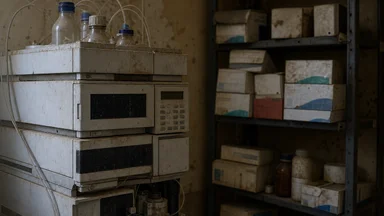
Donor-funded scanners often arrive without service contracts or consumables. A scanner donated by an international NGO in 2022 sat unused for 18 months because the hospital could not afford the annual maintenance contract, which cost roughly US$ 50,000. Another scanner lacked a contrast injector, making it useless for CT angiography—a key tool for identifying large vessel occlusions.
The Ministry of Finance’s duty waiver policy, introduced in 2023, was meant to address one part of the problem. But the waiver requires a separate application for each shipment, and the process can take months. “It is a good policy on paper, but the implementation is bureaucratic,” says the UTH logistics officer. “We need a blanket waiver for all medical equipment, not a case-by-case approval.”
The binding constraint is not clinical skill or even money—it is the logistics of getting equipment from the port to the bedside. Until that chain is fixed, stroke patients in Zambia will continue to miss the window for thrombolysis, and the scanners will sit in customs, waiting for a signature that never comes.
For related coverage on access to care in the region, see Zambia's mental health care caps and Kenya's HIV PrEP access challenges.