Mothers Hail Community Health Workers as Delhi Public Hospitals Deny Maternity Beds
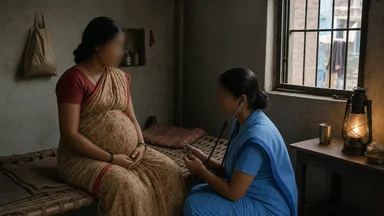
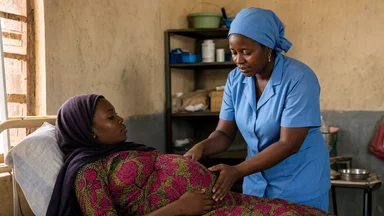
When Priya Devi went into labor on a Tuesday night in May 2024, her husband flagged down an auto-rickshaw and rushed her to the nearest public hospital in East Delhi. The hospital turned them away. No beds, a nurse said, without examining her. They tried two more facilities before an Accredited Social Health Activist (ASHA) worker, Sunita Kumari, arrived at their home at 3 a.m. and delivered the baby on the floor. The story is not unusual. Across Delhi, public hospitals routinely deny maternity admissions, particularly at night and on weekends, and community health workers have become the de facto safety net.
A Bed Denied, a Mother Turned Away
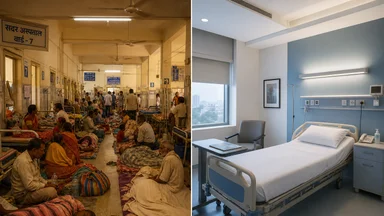
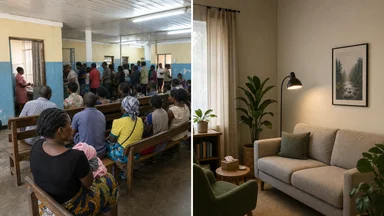
Delhi's public hospitals, which are supposed to offer free maternity care, often send women in labor home or redirect them without a proper examination. A 2023 survey by the Delhi-based NGO Jan Swasthya Abhiyan, titled "Maternity Care Denied: A Study of Denial of Services in Delhi's Public Hospitals," found that roughly 40% of women seeking delivery services at public hospitals during peak hours—between 10 p.m. and 6 a.m.—were denied admission. Many are told to go to a different facility, sometimes 15–20 kilometers away, without any guarantee of a bed there either.
One mother, Rani Sharma, recounted traveling to four hospitals in a single night in December 2023. She was eight centimeters dilated when she finally reached a community health center in a peripheral ward, where an ASHA worker attended the birth. “The hospitals said ‘no bed, no bed’—they didn't even check me,” Sharma said. Her experience echoes a pattern documented in a 2024 study by Kumar et al. in the Indian Journal of Community Medicine, titled "Factors Associated with Denial of Maternity Admission in Delhi Public Hospitals," which reported that denial rates are highest in facilities with fewer than 50 beds, which account for most public maternity units in Delhi.
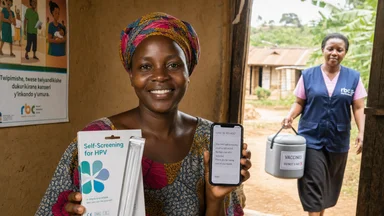
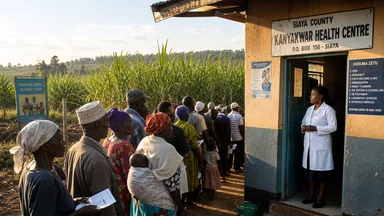
Community health workers, known as ASHAs, fill the gap by conducting home deliveries when hospitals turn women away. ASHAs are trained to handle uncomplicated births and carry basic supplies—sterile gloves, a clean blade, and a resuscitation mask—but they lack the equipment to manage emergencies. A 2022 evaluation by the Public Health Foundation of India found that ASHA-attended home births in Delhi had a neonatal mortality rate of 18 per 1,000 live births, compared to 12 per 1,000 in hospital deliveries, but the gap narrows when accounting for the delay in reaching care.
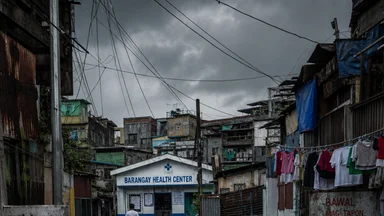
The problem is worst in outlying wards like Nand Nagri and Bawana, where public hospitals are scarce. A 2024 analysis of Delhi's health infrastructure by the Centre for Policy Research showed that the city's 38 public maternity hospitals are concentrated in central districts, leaving peripheral areas reliant on understaffed community health centers. In these zones, ASHAs are often the only healthcare providers available at night.
The Billing Chasm: Free Care vs. Out-of-Pocket
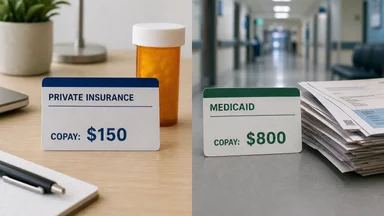
Public hospitals in Delhi advertise free delivery services, but mothers report paying out-of-pocket for medicines, tests, and informal fees. A 2023 survey of 500 women who delivered in public facilities, conducted by the Indian Institute of Public Health, found that the median out-of-pocket expenditure was 5,000 rupees (roughly US$60)—a significant sum for families earning less than 10,000 rupees a month. Hidden costs include ultrasound scans, which are often outsourced to private labs, and “bed charges” in semi-private wards.
Private hospitals, meanwhile, demand upfront deposits of 10,000 to 20,000 rupees for a normal delivery and up to 50,000 rupees for a cesarean section. For many families, these amounts are unaffordable. Community health workers step in to negotiate payment plans with private facilities, leveraging personal relationships with hospital administrators. Sunita Kumari, the ASHA worker, said she has arranged for three women to deliver at a small private nursing home in exchange for a promise to pay 2,000 rupees per month over several months.
The cost comparison is stark. A home birth with an ASHA costs roughly 500 rupees for supplies, while a public hospital admission—even when nominally free—averages 4,000 rupees in unplanned expenses. A 2024 study in the Lancet Global Health estimated that catastrophic health expenditure (more than 10% of household income) occurs in 15% of deliveries in Delhi, with the burden falling disproportionately on families in informal settlements.
Some mothers say they prefer home births because they avoid the humiliation of being turned away. “At least at home, I am treated with respect,” said Geeta, a mother of three in Seelampur. But the preference comes with risks: ASHAs cannot manage postpartum hemorrhage or eclampsia, and delays in reaching a hospital during complications can be fatal. Delhi's maternal mortality ratio, at 72 per 100,000 live births as of 2022, remains higher than the national target of 50.
How Prior Authorization Blocks Emergency Admissions
Delhi's public hospitals require a referral form from a primary health center or a community health center before they will admit a woman in labor. The policy is designed to streamline care, but in practice, it creates a bureaucratic barrier. Women who arrive without the form—often because they went into labor at night or on a holiday—are routinely denied admission, even in emergencies.
Missing paperwork is the second most common reason for denial, after bed shortages, according to a 2024 audit by the Delhi Health Department. Doctors at Lok Nayak Hospital, one of the city's largest public facilities, told researchers that the referral requirement delays care by an average of two hours, during which time some women develop complications. A 2023 WHO report on newborn screening emphasized that early intervention within the first hour of birth is critical for preventing asphyxia and infections—a window that is often missed due to these delays.
Community health workers bypass the bureaucracy through informal channels. ASHAs often know the staff at local hospitals and can call ahead to secure admission without a referral form. “I have the mobile numbers of the nursing in-charges at three hospitals,” said Meena, an ASHA in Shahdara. “If I call, they will take the patient even without the form.” This patchwork of personal connections works for some women but leaves others stranded if their ASHA is unavailable.
The Delhi High Court, in a 2022 judgment, ordered all public hospitals to admit women in labor regardless of referral status, but compliance remains uneven. A follow-up survey by the Human Rights Law Network in 2024 found that 30% of hospitals still deny admission to women without referral forms, citing administrative pressure to maintain records. The court has not imposed penalties for non-compliance.
Formulary Gaps: Essential Medicines Missing from Shelves
Even when women gain admission to a public hospital, the care they receive is often compromised by drug shortages. Essential medicines for maternal and newborn care—including oxytocin, magnesium sulfate, and misoprostol—are frequently out of stock. A 2024 audit of pharmacy inventories at 12 Delhi public hospitals, conducted by the Delhi Drug Control Office, found that oxytocin, used to prevent postpartum hemorrhage, was unavailable in 30% of facilities at any given time.
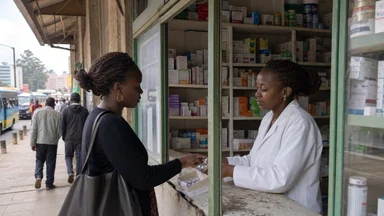
Community health workers carry limited drug kits that include oral contraceptives, iron supplements, and paracetamol, but they do not stock oxytocin or magnesium sulfate. When a woman experiences postpartum hemorrhage at home, the ASHA must arrange emergency transport to a hospital—a delay that can be fatal. One ASHA in Narela recounted a case in 2023 where a mother bled for 45 minutes before reaching a facility; the baby survived, but the mother required a hysterectomy.
Families are often forced to buy medicines from private pharmacies at market rates. A 2023 study in the Journal of Pharmaceutical Policy and Practice found that women who delivered in public hospitals spent an average of 1,200 rupees on out-of-pocket drug purchases. For magnesium sulfate, a single dose costs about 300 rupees in a private pharmacy, compared to 15 rupees in the public system. The price difference is a major barrier for low-income families.
Hospital audits show that stockouts are worst for emergency drugs. A 2024 report by the Delhi health department's own inspection team found that magnesium sulfate was out of stock in 4 of 12 hospitals surveyed, and misoprostol in 5 of 12. The shortages are attributed to supply chain inefficiencies and budget constraints, but the consequences are borne by patients. The WHO's 2026 call to expand newborn screening underscores the need for reliable drug supply to manage birth defects and complications early.
Hospital Consolidation and the Rural–Urban Divide
Delhi's public maternity units are concentrated in central and south districts, with peripheral areas relying on understaffed community health centers. A 2024 geographic analysis by the Delhi Urban Shelter Improvement Board showed that women in outlying wards like Narela, Bawana, and Karawal Nagar have to travel an average of 15–20 kilometers to reach a hospital with a functioning maternity unit. In these areas, 70% of denied admissions occur, according to the Jan Swasthya Abhiyan survey.
Private hospital chains have expanded rapidly in Delhi in the past decade, but they avoid low-income zones. A 2023 mapping study by the Indian Institute of Technology Delhi found that private hospitals with maternity wards are concentrated in affluent neighborhoods, with none operating in the city's 12 resettlement colonies. The result is a two-tier system: wealthier women access private care with predictable costs, while poorer women depend on overcrowded public facilities or home births.
The rural–urban divide within Delhi mirrors a national pattern. India's maternal mortality rate in rural areas is 1.5 times higher than in urban areas, according to the 2020 Sample Registration System. In Delhi, the gap is less pronounced but still significant: peripheral wards have a maternal mortality ratio of 85 per 100,000 live births, compared to 60 in central districts. The difference is driven by delays in reaching care and lower availability of emergency obstetric services.
Some public hospitals have tried to address the imbalance by opening satellite maternity units in peripheral areas, but these units are often understaffed. A 2024 inspection of two such units in Nand Nagri found that they operated only during daytime hours and lacked a surgical theater for cesarean sections. Women with complications are still transferred to central hospitals, adding to the burden on those facilities.
Community Health Workers as System Glue
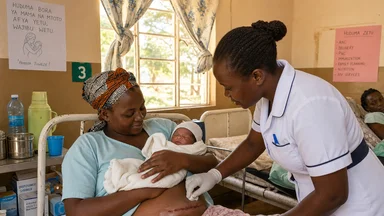
ASHAs are the linchpin of Delhi's maternal health system. They conduct home visits for antenatal monitoring, triage labor signs, and coordinate hospital referrals. A 2024 evaluation by the National Health Mission found that ASHAs in Delhi made an average of 12 antenatal visits per pregnant woman, compared to the national guideline of four. They also provide postnatal care, checking for infections, monitoring breastfeeding, and ensuring newborns receive immunizations.
Mothers report higher trust in ASHAs than in hospital staff. A 2023 qualitative study in the journal Reproductive Health interviewed 40 women in East Delhi and found that 35 said they preferred ASHAs because they were “kind,” “available,” and “speak our language.” Hospital staff, by contrast, were described as “rude” and “rushed.” The trust is not misplaced: program data from the Delhi ASHA program shows that home births supervised by ASHAs have a neonatal mortality rate of 18 per 1,000, compared to 22 per 1,000 for unsupervised home births.
But ASHAs are overworked and underpaid. They receive a honorarium of 2,000 rupees per month for routine work, plus performance-based incentives for specific tasks—for example, 500 rupees for each home delivery they attend. Many ASHAs work 12-hour days and cover 50–100 families each. A 2022 survey by the All India ASHA Workers' Union found that 60% of ASHAs in Delhi reported burnout, and 30% said they had considered quitting.
The system relies on their goodwill. When ASHAs are unavailable—due to illness, training, or personal reasons—the gaps become apparent. A 2024 incident in Bawana, where an ASHA was on leave for a week, saw three women deliver at home without any skilled attendance, and one newborn died of asphyxia. The community health worker model is a patch, not a solution, but it is the only patch many mothers have.
What Works: Simple Fixes from the Frontline
Several low-cost interventions could reduce the burden on both mothers and ASHAs. Centralized bed availability tracking via mobile apps, already piloted in Maharashtra, could help women find a hospital with a free bed without traveling from facility to facility. A 2023 study of a similar app in Rajasthan found that it reduced the number of hospitals visited per woman from 2.5 to 1.3. Delhi has not yet implemented such a system.
Standardized referral forms accepted across all public hospitals would eliminate the paperwork barrier. The Delhi Health Department has discussed a universal referral form since 2022, but it has not been rolled out. A pilot in two districts showed that the form reduced denial rates due to missing paperwork from 15% to 3%. Scaling it citywide would require training staff in all 38 public hospitals and ensuring compliance.
Prepositioned emergency drug kits in community health centers—containing oxytocin, magnesium sulfate, and misoprostol—could save lives during home births. The WHO's 2026 report on newborn screening recommends integrating such kits into community-based care. A 2024 trial in Uttar Pradesh found that community health workers who carried oxytocin reduced postpartum hemorrhage rates by 40% compared to those who did not. Delhi's ASHAs currently do not carry these drugs.
Expanded ASHA training on postpartum hemorrhage management, including the use of a uterine balloon tamponade, could further reduce mortality. The Delhi government has trained 200 ASHAs in advanced emergency skills as of 2024, but that is less than 5% of the city's total workforce. Scaling the training to all 4,500 ASHAs would cost roughly 5 million rupees—a fraction of the budget for a single new hospital wing. The trade-off is that training takes time and requires ongoing supervision, which the health system currently lacks the capacity to provide.
However, these fixes are not silver bullets, and they face significant implementation hurdles. Political will is often lacking: the Delhi government has been slow to adopt even low-cost reforms, and budget allocations for maternal health have remained stagnant in recent years. A 2024 report by the Comptroller and Auditor General of India noted that only 60% of allocated funds for maternal health programs were actually spent in Delhi in 2022-23. Furthermore, the private hospital lobby has resisted mandatory referral form acceptance, arguing that it would increase their liability. Without sustained pressure from civil society and the courts, these solutions may remain on paper. For the mothers who are turned away tonight, they could mean the difference between a safe delivery and a desperate search.