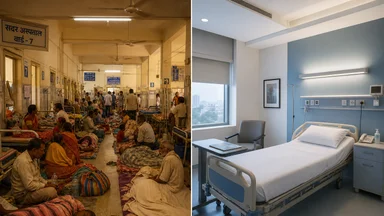
UK Colorectal Surgeons Skip FIT Triage While Patients Wait Six Months for Colonoscopy
In England, a patient referred for suspected colorectal cancer waits, on average, more than five months for a colonoscopy. That figure, from a 2023 audit, sits far beyond the NHS target of two weeks. Meanwhile, a simple, cheap stool test—the faecal immunochemical test, or FIT—could safely triage many of those patients, sending only those with positive results straight to scope. Yet a 2024 survey of UK surgeons found that a majority do not routinely use FIT before colonoscopy. The gap between what the evidence says and what clinicians do is wide, and it costs time, and sometimes lives.
The FIT Triage That Isn't Happening
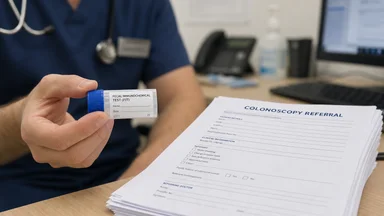
The faecal immunochemical test detects hidden blood in stool, a common early sign of colorectal cancer or significant polyps. It costs the NHS roughly £4 per test, can be done at home, and returns results within days. Since 2017, NICE guidance (DG30) has recommended FIT as the first-line investigation for people with low-risk symptoms who do not meet the criteria for urgent referral. The logic is straightforward: a negative FIT at a cutoff of 10 µg haemoglobin per gram of faections can safely rule out cancer, reducing unnecessary colonoscopies and freeing capacity for those who need them most.
But in practice, many surgeons skip the step. A survey of 200 colorectal surgeons and gastroenterologists, presented at the 2024 Association of Coloproctology of Great Britain and Ireland meeting, found that only about 40% reported routinely using FIT before booking a colonoscopy for symptomatic patients. The rest either went straight to scope or used FIT inconsistently. The result is that thousands of patients each year undergo an invasive procedure they may not need, while others wait months for a slot that could have been freed.
The NHS has set a target that 95% of people referred for suspected cancer should have a definitive diagnosis or cancer ruled out within two weeks. For colorectal cancer, that target is routinely missed. In 2023, the median wait from urgent referral to colonoscopy was 22 weeks in some regions, according to data from the British Society of Gastroenterology. For patients who eventually receive a cancer diagnosis, that delay can mean the difference between early and late stage.
The persistence of this gap between policy and practice is puzzling to some. The test is cheap, validated, and endorsed by every major guideline. Yet it sits on the shelf while endoscopy units run at 110% capacity and patients wait.
Six-Month Wait, Stage Shift
When a patient waits six months for a colonoscopy, the biology of their tumour does not wait. Colorectal cancer typically grows slowly, but a delay of even a few months can shift the stage at diagnosis. A 2023 analysis of NHS data found that patients who waited more than 12 weeks for a colonoscopy after referral were roughly 30% more likely to be diagnosed with stage III or IV disease compared with those scoped within four weeks. Stage III and IV colorectal cancers have five-year survival rates of about 70% and 15%, respectively, versus over 90% for stage I.
The 22-week median wait reported in the audit means that half of patients waited longer than that. For some, the wait stretched beyond 30 weeks. During that time, symptoms may worsen, but the patient remains in a diagnostic limbo—not yet a cancer patient, not yet reassured. The psychological toll is substantial, though harder to measure.
Emergency presentations tell a similar story. About one in four colorectal cancers in the UK are diagnosed after a patient presents to an emergency department with obstruction, perforation, or severe bleeding. These patients have the worst outcomes, with a five-year survival below 20%. Many of these emergency diagnoses could have been caught earlier if the diagnostic pathway had moved faster. FIT triage would not eliminate all delays, but it could prioritise the highest-risk patients for prompt scoping, reducing the number who slip through to an emergency.
The stage shift is not hypothetical. In a 2022 study from Scotland, where FIT-based triage was rolled out earlier, the proportion of colorectal cancers diagnosed at stage I increased by roughly 8 percentage points over three years, while the proportion of emergency presentations fell. The English data, by contrast, shows little improvement in stage distribution over the same period.
Why Surgeons Skip the Stool Test
Why would a surgeon skip a test that could reduce waiting lists and improve outcomes? The answers are a mix of habit, scepticism, and system failures. Some clinicians believe that FIT misses too many cancers. The test's sensitivity is high—above 90% for colorectal cancer at the standard cutoff—but not perfect. A false negative could mean a cancer is missed, and for a surgeon who has seen a patient with a negative FIT turn out to have a tumour, the memory sticks. The perceived risk of missing a cancer outweighs the population-level benefit of triage.
Training and tradition also play a role. Many older surgeons were trained in an era when direct colonoscopy was the default for any patient with rectal bleeding or changed bowel habit. Changing that reflex requires updating guidelines, but also updating minds. The 2024 survey found that surgeons who had been in practice longer were significantly less likely to use FIT routinely. Younger consultants, trained after the NICE guidance was issued, were more adherent.
Logistics are another barrier. Ordering a FIT kit, ensuring the patient completes it, and then waiting for the result adds steps to a process that some clinicians find cumbersome. In a busy clinic, it is easier to simply refer for colonoscopy and let the endoscopy unit sort out the priority. There is also no penalty for non-adherence: no audit flag, no financial incentive, no reputational risk. A surgeon who skips FIT faces no consequence, while a surgeon who follows the guidance may feel they are slowing down their own workflow.
Some argue that the test is not always appropriate. FIT is validated for people with low-to-moderate risk symptoms—change in bowel habit, abdominal pain, or minor bleeding. For patients with high-risk features, such as a palpable mass or iron-deficiency anaemia, direct colonoscopy remains the standard. But the proportion of referrals that fall into the high-risk category is small. Most patients who are scoped could have been triaged.
Evidence for FIT as Gatekeeper
The evidence base for FIT as a triage tool is robust. A 2021 meta-analysis of 28 studies, published in the British Journal of Surgery, found that FIT had a pooled sensitivity of 92% for colorectal cancer and 85% for advanced adenomas at the 10 µg/g threshold. Specificity was around 85%, meaning that a positive result warrants a scope, but a negative result can safely defer one. The negative predictive value exceeded 99% in symptomatic populations—meaning that fewer than 1 in 100 people with a negative FIT actually have cancer.
NICE guidance DG30, updated in 2020, explicitly recommends FIT for people with low-risk symptoms who do not meet the criteria for the two-week-wait pathway. The guidance was based on a health technology assessment that showed FIT could reduce the number of colonoscopies by roughly 30% in this group, freeing capacity for higher-risk patients. The Scottish government adopted the approach early, and by 2022, more than 90% of symptomatic referrals in Scotland were triaged with FIT before colonoscopy.
A Danish study, published in Scandinavian Journal of Gastroenterology in 2023, showed that implementing FIT triage in the capital region reduced median waiting times for colonoscopy from 68 days to 34 days, while the cancer detection rate actually increased, because scopes were directed at the patients most likely to have disease. The false negative rate at the 10 µg/g cutoff was less than 0.5% over a two-year follow-up. No cancers that were missed by FIT went on to cause harm within the study period.
The Scottish programme, which started in 2018, reported in 2024 that the proportion of colonoscopies that found cancer or high-risk polyps had doubled among the triaged group, while the overall number of colonoscopies fell by about 20%. Waiting times for the highest-risk patients dropped below two weeks. The programme was cost-neutral, because the savings from fewer colonoscopies offset the cost of the FIT kits.
Critics point out that FIT is less sensitive for polyps than for cancer, and that some advanced adenomas may be missed. That is true, but the purpose of triage is to prioritise cancer detection, not to find every polyp. Patients with a negative FIT who have persistent symptoms can still be scoped later; the guidance recommends a follow-up in four to six weeks if symptoms continue. The risk of a missed cancer is low enough that the trade-off is widely accepted in countries that have adopted the approach, including Denmark, the Netherlands, and parts of Canada.
The Capacity Crunch Nobody Fixes
Underlying the FIT adherence problem is a deeper crisis: the UK simply does not have enough endoscopy capacity. A 2023 report from the British Society of Gastroenterology estimated that endoscopy units in England were operating at an average of 110% of their planned capacity, with some units running at 140%. The backlog from the COVID-19 pandemic has never been cleared. In 2024, the NHS reported that more than 400,000 people were waiting for a colonoscopy, up from 280,000 in 2019.
The workforce is a bottleneck. The UK has roughly 4,000 gastroenterologists, a number that has not kept pace with demand. Training new endoscopists takes years, and retention is poor. Many consultants report burnout, and early retirement is common. The equipment itself is also in short supply: colonoscopes are expensive, need regular replacement, and are shared across units. A broken scope can halve a unit's throughput for weeks.
Private sector scoping, sometimes touted as a solution, has not helped much. The same 2023 audit found that waits in private clinics were often as long as in the NHS, because the same gastroenterologists work in both systems and the same equipment shortages apply. Some patients pay out of pocket for a private colonoscopy only to find themselves waiting months anyway.
The national plan to expand the endoscopy workforce, announced in 2021, aimed to train an additional 1,000 endoscopists by 2025. As of early 2026, the target had not been met. The plan also included a commitment to roll out FIT triage nationally, but implementation has been patchy, with some regions embracing it and others ignoring it. Without a coordinated effort to both increase capacity and adopt triage, the waits will continue.
What a Proper Triage Pathway Would Look Like
A properly implemented FIT triage pathway would start in primary care. When a GP refers a patient with low-risk symptoms, they would order a FIT kit as part of the referral. The patient completes the test at home and returns it by post. Results come back within three days. If the FIT is positive at the 10 µg/g threshold, the patient is fast-tracked to a colonoscopy within two weeks. If negative, the GP is advised to manage symptoms and consider a repeat FIT in four to six weeks if symptoms persist. Patients with high-risk features—a palpable mass, unexplained weight loss, or iron-deficiency anaemia—bypass the test and go straight to scope.
The pathway is not new. It is essentially what NICE has recommended since 2017. But making it work requires that every step is supported: GPs must know how to order the test, patients must receive clear instructions, laboratories must process the kits quickly, and surgeons must trust the result. Audit cycles with feedback to individual clinicians can improve adherence. In one pilot in the North West of England, a combination of GP education and monthly feedback increased FIT use from 30% to 85% of eligible referrals within a year.
The cutoff matters. Some surgeons want to lower it to 4 µg/g to capture more cancers, but that would double the number of positive results and increase colonoscopy demand. The 10 µg/g threshold is a compromise that balances sensitivity against specificity. For patients with a negative result at that cutoff, the risk of cancer is low enough that a four-week wait is safe. For those with a positive result, the urgency is clear.
Surgeons themselves need to be part of the solution. The 2024 survey showed that those who understood the evidence were more likely to comply. Training sessions that present the Scottish and Danish data, alongside local audit results, can shift practice. Some units have made FIT a mandatory step before booking an outpatient colonoscopy, with an override only for high-risk features. Where this has been tried, waiting lists have dropped.
One Number That Should Change Everything
Roughly 10,000 people die from colorectal cancer in the UK each year. Many of those deaths are avoidable. The charity Bowel Cancer UK estimates that about 1,500 of those deaths could be prevented if FIT triage were fully implemented and waiting times reduced. That number is not a precise calculation, but it is based on modelling from the Scottish programme, which showed a 12% reduction in colorectal cancer mortality after the introduction of triage, after adjusting for other factors.
Another number: one in four colorectal cancers in the UK is diagnosed at an emergency presentation. That rate has not budged in the past decade. In Scotland, where triage is routine, the emergency presentation rate has fallen to about 18%. The difference represents roughly 1,200 patients per year who in England are diagnosed too late.
The cost argument is also compelling. A colonoscopy in the NHS costs roughly £500. A FIT kit costs £4. If triage reduces the number of colonoscopies by 20% among the low-risk referral group, the savings could be redirected to hire more endoscopists or buy more scopes. The Scottish programme was cost-neutral within two years. The English NHS, if it scaled the programme nationally, could see similar returns.
Patient advocates have been pushing for a mandated protocol. In 2025, Bowel Cancer UK launched a campaign called "Test First" that calls on NHS England to make FIT triage a contractual requirement for all colorectal referral pathways. The response from NHS England has been cautious, citing local autonomy and the need for more evidence. But the evidence is already there. What is missing is the will to enforce it.
In the end, the gap between evidence and practice in colorectal cancer triage is not a scientific problem. It is a problem of habit, capacity, and accountability. The test works. The patients wait. The surgeons decide. And the numbers do not lie.
Disclaimer: This article is for informational purposes only and does not constitute personalised medical advice. Readers should consult their healthcare provider for any health concerns or decisions.