Zambia Public Depression Care Caps at Six Sessions While Private Therapy Runs Unlimited
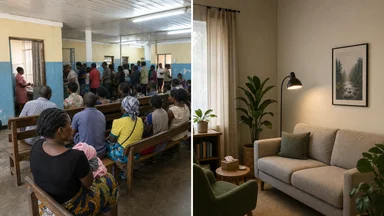
In Lusaka, a woman with persistent depression waits weeks for a referral from her primary care clinic to the national psychiatric hospital. If she is seen, she may receive up to six therapy sessions—and then she is discharged, often with residual symptoms. Across town, a private clinic offers unlimited sessions at roughly US$ 50 each, a fee that places it out of reach for most Zambians. This two-tier system, codified in the 2019 National Mental Health Policy, raises a stark question: why does a country with one of the world's largest treatment gaps cap the very care that could close it?
Six Sessions and a Referral: The Public-Sector Ceiling
Zambia's public mental health system operates under a strict limit: six therapy sessions per patient for depression, with no option for extension except a new referral that restarts the process. The cap applies across all public facilities, from the Chainama Hills Psychiatric Hospital in Lusaka to rural health posts that may have no trained counselor at all.
Referrals from primary care, where most patients first present, can take months. A 2022 study from the University of Zambia found that the median wait time for a specialist mental health appointment in Lusaka was roughly 12 weeks. Rural patients face even longer delays, compounded by transport costs and limited clinic hours.
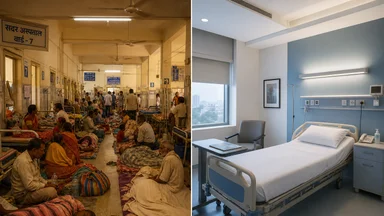
The national psychiatric hospital in Lusaka, the country's only tertiary mental health facility, operates at roughly double its intended capacity, according to Ministry of Health reports. Beds line hallways, and outpatient clinics see 80 to 100 patients per day. Staff are stretched, and supervision of junior clinicians is inconsistent.
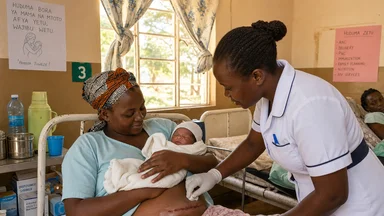
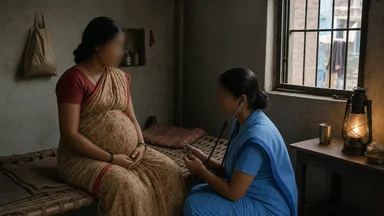
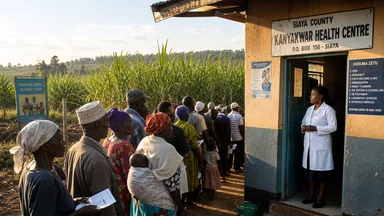
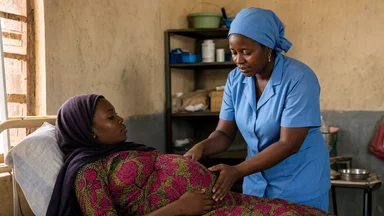
In rural provinces such as Luapula or Western, a primary health centre may have no mental health professional at all. A nurse with basic training in depression screening might be the only resource. If a patient requires therapy beyond medication, they are referred to a district hospital that may have a counselor—but the six-session cap still applies.
Private Therapy: No Limits for Those Who Can Pay
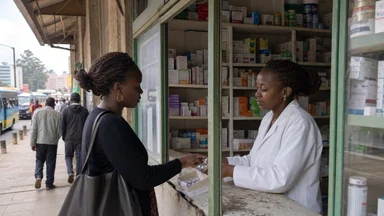
Private mental health clinics in Lusaka and on the Copperbelt offer a different reality. At facilities such as the Lusaka-based Serenity Mental Health Centre, patients can book weekly sessions for as long as they wish, at fees typically in the range of US$ 40 to US$ 80 per hour. Some clinics also offer sliding-scale fees, but even the lower end is prohibitive for the majority of Zambians, where the gross national income per capita was about US$ 1,300 in 2023.
Employer-sponsored coverage for mental health exists but is largely limited to senior staff at multinational companies or large mining firms. A handful of private insurance plans include outpatient mental health benefits, but they are rare and typically cap the number of sessions themselves—often at 10 to 12 per year—or require pre-authorisation that is not always granted.
Telehealth platforms, such as the Zambia-based mhHub, have begun bridging part of the gap by offering video consultations with psychologists at reduced rates, roughly US$ 15 to US$ 25 per session. But these require a smartphone and reliable data, which many rural patients lack. A 2023 survey by the Zambia Information and Communications Technology Authority found that only about 45% of rural households had access to mobile internet.
For those who can afford private care, the experience is markedly different: longer sessions, continuity with the same therapist, and the ability to address complex or chronic depression without arbitrary cutoffs. The contrast with the public sector's six-session ceiling underscores a system where money determines the depth of care.
Depression Prevalence vs. Treatment Coverage
The World Health Organization estimates that roughly 5–7% of Zambian adults experience depression each year. In a population of about 20 million, that translates to roughly 1 to 1.4 million people. Yet only about 1 in 10 receives any formal treatment—a treatment gap of roughly 90%, consistent with many low-income countries in sub-Saharan Africa.
Public spending on mental health in Zambia is approximately US$ 0.20 per capita per year, according to a 2020 WHO Mental Health Atlas report. That is far below the US$ 2–4 per capita that global health experts consider minimally adequate. Most of the budget goes to the national psychiatric hospital, leaving little for community-based services.
Task-shifting—training nurses and community health workers to deliver brief psychological interventions—has been piloted in several districts. A 2021 study in the Lancet Psychiatry found that a six-session problem-solving therapy delivered by trained lay counselors in Lusaka reduced depression symptoms compared with usual care. But supervision and supply of antidepressant medications remain spotty, and the pilots have not been scaled nationally.
Antidepressant availability in public clinics is inconsistent. Fluoxetine and amitriptyline are on the national essential medicines list, but stockouts occur frequently, especially in rural areas. A 2022 Ministry of Health audit found that only about 60% of district hospitals had adequate supplies of first-line antidepressants.
The Policy Gap: Why Six Sessions Was Chosen
The six-session cap was introduced as part of the 2019 National Mental Health Policy, which aimed to standardise care and allocate scarce resources. The policy was informed by evidence from high-income countries on brief interventions for depression—such as cognitive behavioural therapy delivered in 6–8 sessions—but no local cost-effectiveness study was conducted to determine whether the cap was appropriate for Zambia's context.
Ministry of Health officials have cited resource constraints as the primary reason for the cap. With only about 30 psychiatrists in the country—roughly 1 per 670,000 people—and fewer than 100 psychologists, the system cannot offer unlimited therapy to everyone. The cap is meant to maximise the number of patients seen, even if each receives less than optimal care.
However, clinicians report that many patients are discharged with residual symptoms after six sessions. A 2023 qualitative study published in the Journal of Affective Disorders found that therapists in Lusaka often felt pressured to discharge patients who still met criteria for depression because the cap left no room for extension. Some patients return months later with a new referral, but the cycle repeats.
Critics argue that the cap was set without input from local mental health professionals or patients. The policy does not differentiate between mild, moderate, and severe depression; a patient with severe, recurrent depression receives the same number of sessions as someone with a first mild episode. There is no mechanism for extension based on clinical need.
Equity Metrics: Who Gets Care and Who Falls Through
Access to mental health care in Zambia is highly unequal. Urban residents in Lusaka are roughly five times more likely to receive any treatment than those in rural provinces, according to a 2021 analysis by the University of Zambia's Department of Psychiatry. The six-session cap applies everywhere, but in rural areas even that minimal care may be unavailable due to lack of trained staff.
Women are more likely than men to seek help for depression, but they remain underdiagnosed. Cultural stigma around mental illness leads many women to present with somatic complaints—headaches, fatigue, body aches—that are treated as physical ailments without mental health screening. Men, meanwhile, often present late, with severe symptoms or alcohol use disorders, and may be more likely to end up in police cells than in clinics.
Adolescents have no dedicated public mental health service. Child and adolescent psychiatry is virtually absent outside of Lusaka, and the six-session cap does not account for developmental considerations. A 2022 study in the Journal of Child Psychology and Psychiatry estimated that about 12% of Zambian adolescents meet criteria for a depressive disorder, but fewer than 1% receive any treatment.
People with severe mental illness—such as schizophrenia or bipolar disorder—often fall through the cracks entirely. The public system prioritises depression and anxiety, but those with psychosis may cycle through police custody and prisons due to a lack of community-based care. A 2020 report by the Zambian Human Rights Commission documented that mental health units in prisons held roughly 200 people, many of whom had not been convicted of any crime.
What a Reformed System Could Look Like
Mental health advocates in Zambia have proposed several reforms. The most direct is to remove the session cap for patients with severe or persistent depression, replacing it with a stepped-care model that matches session intensity to clinical need. Such a model would require better assessment tools and supervision, but it could be implemented within existing budgets by reallocating spending from tertiary to community services.
Integrating mental health into primary care nationwide is another priority. The WHO's Mental Health Gap Action Programme (mhGAP) has been piloted in a few districts, training nurses to diagnose and treat depression, anxiety, and alcohol use disorders. Scaling mhGAP to all 116 districts would require investment in training, supervision, and supply chains, but it could dramatically reduce the treatment gap.
Expanding the cadre of non-specialist counselors—similar to the lay counselors used in the problem-solving therapy trial—could increase capacity without requiring more psychiatrists. A 2023 cost-effectiveness analysis by the University of Zambia estimated that training and deploying 1,000 community-based counselors could provide brief therapy to an additional 200,000 patients per year at a cost of roughly US$ 2 million, or US$ 10 per patient treated.
Digital tools, such as mobile phone-based supervision and follow-up, could help maintain quality in remote areas. The mhHub platform already offers a model for remote consultation, but it needs to be integrated with the public system and made affordable for low-income users. Some pilot programmes have used interactive voice response to screen for depression and provide automated cognitive behavioural therapy exercises, though evidence for effectiveness in Zambia is still limited.
Funding reallocation from the national psychiatric hospital to community services is politically difficult but necessary. Currently, roughly 70% of the mental health budget goes to Chainama Hills, leaving little for primary care. A gradual shift, combined with improved referral pathways, could free resources for more equitable coverage.
The Cost of Not Acting: Measurable Harm
The economic cost of untreated depression in Zambia is substantial. A 2022 study by the World Bank estimated that lost productivity from depression and anxiety costs low-income countries roughly 2–3% of GDP annually. For Zambia, that translates to hundreds of millions of dollars in lost output each year—far more than the cost of scaling up mental health services.
Suicide rates are underreported in Zambia due to stigma and legal barriers (attempted suicide remains a criminal offense), but available data suggest a rising trend in urban areas. A 2021 analysis of police records found that suicide deaths in Lusaka had increased by roughly 30% over the previous five years, with young adults disproportionately affected.
Stigma prevents many patients from returning to care after the six-session cap is reached. A 2023 survey of patients discharged from public clinics in Lusaka found that about 40% did not seek further treatment, even though they still met criteria for depression. Some reported feeling that the system had given up on them.
Children of parents with untreated depression show higher rates of developmental delays, behavioural problems, and school dropout. A 2022 study from the University of Zambia found that children of mothers with untreated depression were roughly twice as likely to be stunted and three times as likely to repeat a grade. Intergenerational effects compound the economic and social costs.
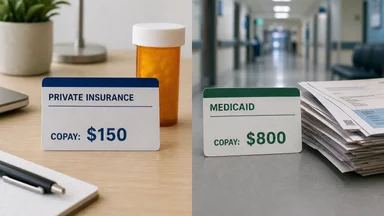
The current system entrenches inequality: those who can afford private therapy receive unlimited care, while those who rely on the public sector are limited to six sessions, regardless of need. Reforming the cap is not just a clinical issue—it is a matter of fairness.
Counter-Arguments: Is the Cap Defensible?
Proponents of the six-session cap argue that in a resource-constrained setting, some care is better than none. With roughly 30 psychiatrists for a population of 20 million, unlimited therapy would quickly overwhelm the system, they contend. A 2020 Ministry of Health white paper estimated that removing the cap entirely would increase demand for therapy by 300–400%, far exceeding current capacity. The cap, in their view, is a triage tool—a way to ensure that the largest possible number of patients receive at least a basic intervention.
There is also evidence that brief therapy can be effective for mild to moderate depression. A 2019 meta-analysis of randomised controlled trials in low-income countries found that six to eight sessions of cognitive behavioural therapy or problem-solving therapy produced clinically meaningful improvements in depressive symptoms, with effects lasting up to 12 months. The cap may therefore be clinically appropriate for a subset of patients, particularly those with first-episode or situational depression.
However, critics counter that the cap is applied uniformly, without clinical stratification. A patient with severe, recurrent depression may require 12 to 20 sessions to achieve remission, and discharging them at six sessions risks relapse. A 2021 study in JAMA Psychiatry found that among patients with moderate to severe depression, those who received fewer than eight sessions had significantly higher relapse rates at six-month follow-up. The cap, they argue, trades short-term access for long-term outcomes.
Some policymakers have suggested a compromise: keep the cap for mild cases but allow extensions for patients with severe or persistent depression, subject to review by a senior clinician. This would require better assessment tools and supervision, but it could be implemented without a major budget increase. A pilot at Chainama Hills in 2022 tested a stepped-care model where patients with severe depression received up to 12 sessions; preliminary results showed a 25% higher remission rate compared with the standard six-session protocol.
Another counter-argument is that the cap incentivises efficiency. Clinicians may be more focused and goal-oriented when they know the number of sessions is limited, which could lead to better outcomes within the available time. But qualitative studies suggest the opposite: therapists feel rushed and unable to build therapeutic rapport, especially with patients who have complex trauma or comorbidities. A 2023 study in the Journal of Clinical Psychology found that Zambian therapists reported spending the first two sessions on psychoeducation and assessment, leaving only four sessions for active therapy—often insufficient for meaningful change.
Ultimately, the debate reflects a deeper tension between equity and efficiency in global mental health. The cap may be a pragmatic response to scarcity, but it also perpetuates a two-tier system where the wealthy receive unlimited care and the poor receive a rationed, potentially inadequate, intervention. Any reform must balance the need to reach more patients with the imperative to provide effective care.
This article is for informational purposes only and does not constitute professional medical advice. If you or someone you know is experiencing a mental health crisis, please contact a qualified healthcare provider or a local helpline.