Nigerian Rural Maternity Centres Pay Midwife Salaries While Urban Hospitals Recruit Doctors
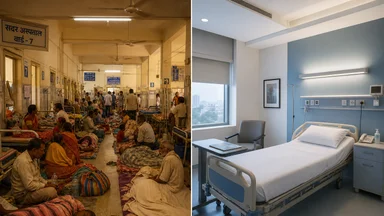
In Lagos, a newly qualified doctor at the Lagos University Teaching Hospital can expect a monthly salary of around ₦400,000–500,000, plus housing and car loans. In Zamfara, a midwife working in a rural maternity centre earns roughly ₦80,000–120,000, often with delayed hardship allowances. This gap is central to Nigeria's health workforce crisis. As urban hospitals compete for doctors with ever-rising pay, rural maternity centres are left with midwives who are expected to do the work of obstetricians for a fraction of the salary. The imbalance has deadly consequences: Nigeria's maternal mortality ratio remains one of the highest in the world, at over 1,000 deaths per 100,000 live births in rural areas. The divide between where the money goes and where the need is greatest is a policy failure that demands rethinking.
Urban Tertiary Hospitals Dominate Health Budgets
Public health spending in Nigeria is heavily skewed toward urban tertiary facilities. State health budgets typically allocate 60–70% of funds to hospitals in state capitals and major cities, leaving primary care centres—especially those in rural areas—with the remainder. A 2023 analysis of state health budgets by the Nigerian Health Watch found that tertiary hospitals received an average of 70% of recurrent expenditure, while primary care got less than 15%. In states like Katsina and Bauchi, primary care's share was under 10%. This is despite the National Health Act of 2014 mandating that at least 50% of the Basic Health Care Provision Fund be spent on primary care. The fund itself is underfunded, and what reaches facilities is often eaten by administrative costs. The money that does flow tends to follow the doctors, not the patients.
This pattern is visible in salary structures. Doctors employed by Lagos State earn between ₦400,000 and ₦600,000 monthly, depending on years of service and specialisation. Midwives in the same state's primary health centres earn roughly ₦100,000–150,000. In states like Zamfara, Kebbi, and Yobe, where the doctor-to-population ratio can be as low as 1:50,000, the gap is even starker: a midwife might earn ₦80,000 while the few doctors available are posted to urban hospitals and earn three to five times that amount.
The federal government's salary structure for health workers is codified in the Consolidated Medical Salary Structure (CONMESS) for doctors and the Consolidated Health Salary Structure (CONHESS) for other health professionals. But these scales are applied unevenly. Urban facilities often supplement salaries with allowances—clinical duty, call duty, hazard pay—that rural centres cannot afford or do not disburse. The result is that a doctor in a rural post may earn 20–30% less than a colleague in Lagos, even before accounting for the lack of housing, schools, and career opportunities. Midwives, already at the bottom of the pay ladder, face a system that values facility-based curative care over community-based preventive and maternal services.
Midwives as Defacto Obstetricians in the North-West
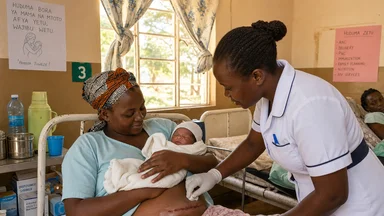
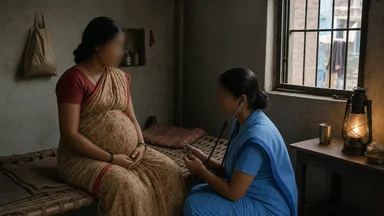
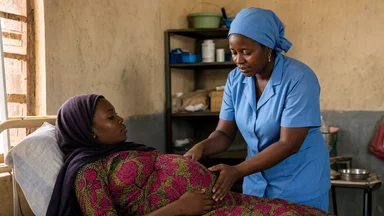
In Kebbi and Sokoto states, midwives attend roughly 80% of all deliveries. They manage eclampsia, postpartum haemorrhage, and neonatal resuscitation—without physician backup often hours away. This is task-shifting by necessity, not by design. Training programmes exist: the National Primary Health Care Development Agency runs a six-month intensive course for midwives on emergency obstetric care. But once trained, these midwives remain on the same pay scale as those who only handle routine antenatal care. Their salary remains at Band 6–8 in the public service, while a nurse with similar years of experience may be at Band 8–10, and a doctor at Band 12–15.
The psychological toll is severe. Burnout rates among rural midwives in northern Nigeria are estimated at 40–60% annually, according to a 2022 study in the Nigerian Journal of Clinical Practice. Many work 12-hour shifts, six days a week, with no overtime pay. They are expected to be on call for emergencies, yet receive no call-duty allowance. The lack of a clear career ladder compounds the problem. A midwife cannot easily become a nurse or a doctor without starting over in the educational system. There is no advanced midwife or consultant midwife cadre in most states. The result is that midwives leave rural posts for urban clinics, private hospitals, or even non-health sectors as soon as they can.
Some states have tried to address this. In 2021, Kaduna State introduced a midwife retention scheme that offered a ₦50,000 monthly rural allowance and priority for further training. Initial uptake was promising, but the programme was not sustained due to budget constraints. In Jigawa, a similar effort collapsed when the state government stopped paying the allowance after six months. These examples illustrate a pattern: retention schemes are often launched with fanfare but abandoned when funds run dry. The lack of a national framework means these interventions are ad hoc and fragile. Meanwhile, the demand for midwives grows as the population increases and the doctor shortage persists.
Urban Recruitment Bonuses vs Rural Retention Crisis
Urban hospitals in Nigeria have become adept at attracting doctors. The Lagos University Teaching Hospital, for instance, offers not only a competitive salary but also housing loans, car loans, and sponsorship for postgraduate training. Private hospitals in Abuja and Port Harcourt lure doctors with salaries exceeding ₦1 million per month for specialists. These packages are often funded by private health insurance and out-of-pocket payments from wealthy patients. Public tertiary hospitals in cities also benefit from donor-funded projects that top up salaries or provide training opportunities.
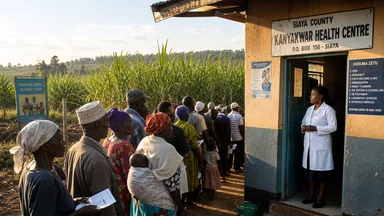
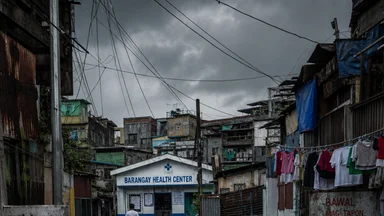
In contrast, rural posts in states like Yobe have doctor vacancy rates above 50%. A 2024 report by the Nigeria Medical Association noted that some local government areas in Adamawa and Borno had no doctor at all. The few doctors who do accept rural postings often leave within a year, citing isolation, poor security, and lack of educational opportunities for their children. The government's rural hardship allowance, set at 20–30% of basic salary, is rarely paid on time—or at all. In a 2023 survey by the Association of Resident Doctors, 65% of respondents in rural postings said they had not received hardship allowance in the previous six months.
Midwives face similar challenges but with even fewer options. They cannot easily move to urban areas because their skills are most needed in the villages, and their families often live there. But the pay gap makes it hard to stay. A midwife in rural Zamfara who delivers 50 babies a month earns less than a clerk in the state ministry. The system rewards proximity to power, not impact on health outcomes.
Policy Fixes That Miss the Mark
The National Health Act of 2014 was supposed to change this. It created the Basic Health Care Provision Fund (BHCPF), which channels federal money to primary care. But implementation has been slow. As of 2025, only about 30% of the fund had reached frontline facilities, according to a report by the Budget Office. Most of the money is spent on drugs and equipment, not human resources. The BHCPF guidelines allocate only 20% of the fund to human resources for health, and even that is often used to hire new staff rather than improve pay for existing ones.
State-level recruitment freezes compound the problem. Many states have not hired new midwives or nurses in years, leaving posts unfilled even as the population grows. In 2023, the Nigerian Senate passed a resolution urging states to lift recruitment freezes, but compliance has been patchy. Meanwhile, loan schemes for medical students—such as the Nigeria Medical and Dental Council's loan programme—require graduates to serve in rural areas for a period, but the enforcement is weak. Many doctors buy their way out or find loopholes. The loans themselves are small and do not cover the full cost of training, so they do little to attract candidates from poor backgrounds.
There is no national midwife retention strategy. The Federal Ministry of Health has a task-shifting policy, but it focuses on training, not on pay or career progression. The policy assumes that midwives will stay because they are needed, but need does not pay the bills. In a survey by the White Ribbon Alliance, 70% of midwives in northern Nigeria said they would leave if they could find another job. The few retention programmes that exist—such as the Midwives Service Scheme, which placed newly qualified midwives in rural areas—were effective but short-lived due to funding gaps.
The Cost-Effectiveness Argument for Midwife Upgrading
From a purely economic standpoint, investing in midwives makes sense. Training a midwife costs roughly ₦2 million, compared to ₦15 million for a doctor. A midwife can cover 500–1,000 women per year for antenatal, delivery, and postnatal care. In rural areas, where the doctor-to-population ratio is abysmal, midwives are the only option. Studies from similar settings in Ethiopia and Rwanda have shown that skilled birth attendance—which midwives provide—can reduce maternal mortality by 50–70%. Scaling up midwife-led care in Nigeria's high-mortality states could save an estimated 20,000 lives per year, according to a 2024 modelling study by the University of Ibadan.
Yet the cost of upgrading midwife salaries is modest. Bringing midwives from Band 6–8 to Band 10–12 would cost an estimated ₦50–80 billion per year across all states—less than 5% of the federal health budget. The return on investment, in terms of lives saved and reduced complications, is substantial. A 2023 analysis by the World Bank found that every ₦1 spent on midwife retention in rural Nigeria yields ₦4 in benefits from reduced maternal deaths, fewer caesarean sections, and lower neonatal intensive care costs.
But cost-effectiveness is not the only metric. There is also the question of equity. Urban populations already have better access to care; spending more on urban doctors widens the gap. Rural women, who are poorer and have less education, bear the brunt of the current system. Upgrading midwife pay is not just an economic decision—it is a moral one. Yet policymakers often resist, citing budget constraints and the political power of the medical lobby. Doctors' unions have opposed efforts to raise midwife salaries, arguing that it would dilute the status of the medical profession. The tension is real and unresolved.
What a Fair Wage Scale Could Look Like
Several concrete steps could begin to close the gap. First, the public service salary structure could be revised to place midwives at Band 12–14 (currently Band 6–8). This would roughly double their pay and align it with that of nurses with similar experience. Second, a rural posting bonus of 30–50% of base salary, paid monthly and on time, would make rural posts more attractive. Third, a clear specialisation track—from midwife to advanced midwife to consultant midwife—would provide career progression without requiring a medical degree. Fourth, performance-based grants to facilities that retain staff for three years or more could incentivise local governments to improve working conditions. Fifth, co-located housing and childcare for rural health workers would address two of the biggest barriers to retention: security and family separation.
Some of these ideas are not new. The National Primary Health Care Development Agency has proposed a "midwife career ladder" in its 2023–2027 strategic plan, but it has not been funded. The Nigerian Midwives Association has called for a separate salary scale for midwives, similar to the one for doctors, but the government has not acted. The challenge is not a lack of good ideas—it is a lack of political will. State governors, who control health budgets, often prioritise visible projects like hospitals over pay raises for low-status workers.
There are also counter-arguments. Some health economists argue that raising midwife salaries without improving productivity or accountability could lead to waste. Others worry that it would create a new class of health workers who are overpaid relative to their training. But these concerns are manageable. Performance-based pay and regular supervision can ensure value for money. And the current situation—where midwives are paid so little that they leave or become demotivated—is already wasteful. A well-paid, well-supervised midwife is far more productive than a burnt-out one.
Next Steps for Donors and State Governments
Donors like the World Bank, through the Nigeria for Women Project, have already shown interest in health workforce issues. Expanding that project to include a midwife retention component could provide both funding and technical assistance. State governments, which have the constitutional authority to set salary scales for their own health workers, can act without waiting for the federal government. A pilot programme in two high-mortality local government areas—say, one in Katsina and one in Bauchi—could test the impact of salary upgrades and rural bonuses on retention and maternal outcomes.
Independent monitoring is essential. Salary disbursement via mobile payments, with verification by community health committees, can reduce delays and leakage. The National Health Insurance Authority could also play a role by including midwife-led delivery in its benefits package and paying higher rates for rural facilities. The cost of such a pilot is modest—perhaps ₦500 million per year for two LGAs—and the evidence it would generate could inform national policy.
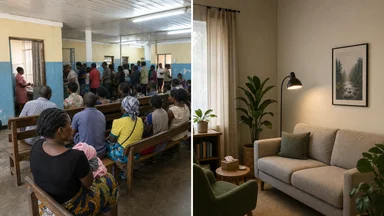
The divide between urban hospitals and rural maternity centres reflects a choice in resource allocation. Nigeria has the resources to pay midwives a living wage; what it lacks is the political will to do so. Until that changes, the mothers of Zamfara, Kebbi, and Yobe will continue to die from complications that a well-paid, well-supported midwife could have prevented. The gap in salaries is not just a budget line—it is a measure of how much we value the lives of rural women.