UK Oncology Nurses Spot Trial-Eligible Mutations That Genomic Panels Routinely Miss
A 58-year-old woman with metastatic colorectal cancer had her tumour sequenced on a standard 50-gene panel at a district general hospital. The report came back negative for all actionable alterations. But the oncology nurse specialist reviewing the case noticed something odd: the patient's immunohistochemistry showed loss of MLH1 and PMS2, a pattern strongly suggestive of Lynch syndrome. She requested a separate microsatellite instability test. It came back high. The patient was reclassified as MSI-H, became eligible for pembrolizumab, and entered a first-line trial. The initial panel had missed the mutation entirely.
Across UK oncology networks, nurses are acting as a second pair of eyes, catching genomic findings that automated pipelines and standard panels routinely overlook. As the NHS Genomic Medicine Service scales up, the gap between what panels can detect and what patients actually carry is becoming a practical bottleneck for trial enrolment.
The Mutation the Panel Overlooked
Routine genomic panels, typically targeting 50 to 500 known hotspot regions, are designed for speed and cost-efficiency. They work well for common driver mutations in EGFR, KRAS, and BRAF but have well-documented blind spots. Structural variants, copy-number changes, and alterations in non-coding regions often escape detection. Some estimates suggest that 5–10% of clinically actionable mutations are missed by standard panels alone.
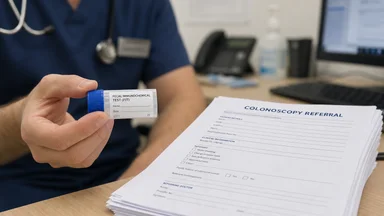
The Lynch syndrome case is instructive. Many colorectal cancer panels do not include the full sequencing of mismatch repair genes; instead, they rely on microsatellite instability testing as a separate assay. When that assay is not ordered—or when the panel report does not prompt it—the patient's eligibility for immunotherapy or clinical trials disappears. Nurses who review both the genomic report and the histology are uniquely positioned to flag this discordance.
Another common miss involves BRAF non-V600 mutations. While V600E is the most frequent alteration in melanoma and some colorectal cancers, non-V600 mutations account for roughly 10–15% of BRAF alterations. Many targeted panels only probe the V600 codon, leaving patients with non-V600 mutations undetected and ineligible for MEK inhibitor trials that might still benefit them.
The tension between test sensitivity and clinical reality is not new, but it is becoming more acute as trial eligibility increasingly depends on molecular subtyping. A missed mutation is not just a laboratory error; it is a missed opportunity for treatment.
Why Panels Have Blind Spots
Genomic panels are designed around known hotspots—regions where mutations commonly occur in cancer. This approach is efficient but inherently limited. Rare driver mutations, structural variants such as gene fusions, and copy-number alterations are often invisible to panel-based sequencing. For example, NTRK fusions, which occur in fewer than 1% of solid tumours, require dedicated RNA-based assays or comprehensive DNA sequencing to detect. Most standard panels do not include the intronic breakpoints needed to identify these fusions. In one case from a UK district hospital, a nurse's insistence on RNA testing led to the identification of an ETV6-NTRK3 fusion in a patient with a rare salivary gland tumour, who then entered a larotrectinib trial and achieved a partial response.
Tumour heterogeneity adds another layer of complexity. A subclonal mutation present in only a fraction of tumour cells may fall below the variant allele frequency threshold that many panels use for calling. If the threshold is set at 5%, a mutation present in 3% of cells will be reported as negative. Yet that mutation could still drive resistance or represent a targetable alteration.
Turnaround pressure also limits depth. In the NHS, genomic testing for cancer is expected to return results within 14 to 21 days. To meet these timelines, laboratories often use lower-depth sequencing or smaller panels, which reduces sensitivity. A 2023 audit from the West Midlands Genomic Laboratory Hub found that roughly 4% of cases had a clinically significant variant missed on initial panel testing that was later identified by a broader assay or orthogonal method.
Cost is a further constraint. Comprehensive genomic profiling, whole-exome sequencing, or whole-genome sequencing remains more expensive than targeted panels. The NHS Genomic Medicine Service has been rolling out whole-genome sequencing for certain cancers, but for many patients, the default remains a targeted panel. The result: a system that is fast and affordable but occasionally blind.
Nurses working at the interface of clinical care and laboratory results are the ones who notice when the picture does not add up.
Nurses as the Second Pair of Eyes
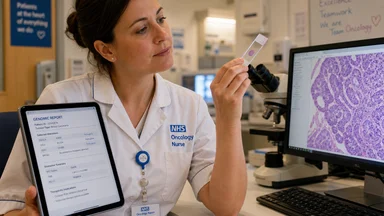
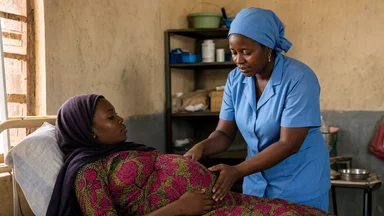
The role of the oncology nurse has expanded well beyond chemotherapy administration and symptom management. In many UK cancer centres, nurse specialists now review genomic reports, attend molecular tumour boards, and communicate results to patients. Some have completed formal training in somatic variant interpretation through programmes like the NHS Genomic Education Programme or the Royal College of Nursing's cancer genomics modules.
Clinical observation can catch what automated variant calling misses. A nurse who knows that a patient's tumour histology—say, a mucinous colorectal cancer—is strongly associated with BRAF mutations may push for additional testing even when the initial panel is negative. In breast cancer, nurses track discordance between immunohistochemistry and next-generation sequencing results for HER2 status, a distinction that matters for trials of HER2-directed therapies in the HER2-low setting.
One nurse-led initiative at a district hospital in Nottingham established a weekly "genomic huddle" where nurses, pathologists, and oncologists review cases with discordant or ambiguous results. In the first six months, the huddle identified 12 patients with actionable mutations that had been missed by the initial panel, including two with NTRK fusions who were subsequently enrolled in a larotrectinib trial.
Training programmes are key. The NHS Genomic Medicine Service offers a free online course in somatic variant interpretation for nurses. It covers the basics of sequencing technology, common artefactual calls, and how to recognise when a negative result might be false. As of late 2024, roughly 300 nurses across the UK had completed the course, and early feedback suggests it increases confidence in raising concerns with the molecular tumour board.
Yet not everyone is convinced. Some laboratory scientists argue that nurses lack the technical background to interpret complex genomic data and that their involvement could lead to unnecessary re-testing or false alarms. Proponents counter that the nurse's value lies not in making the final call but in flagging discrepancies that the system might otherwise miss.
Evidence from UK Oncology Networks
Data from the West Midlands Cancer Alliance pilot, published in 2024, provides specific evidence that nurse-led review improves trial enrolment. The pilot introduced a nurse specialist into the molecular tumour board workflow for colorectal and lung cancer patients. Over 18 months, the nurse reviewed 420 cases and flagged 31 for re-testing or orthogonal validation. Of those, 29 had a clinically actionable mutation confirmed, and 22 patients were subsequently enrolled in a clinical trial that would not have been offered based on the original panel result. That represents a 7% increase in trial enrolment from the cohort.
The NHS Genomic Medicine Service has also collected real-world data on discordance rates. In a 2024 report, the service noted that approximately 6% of cases reviewed by a multidisciplinary team had a significant discrepancy between the genomic panel result and the clinical or histological picture. In most of those cases, the discrepancy was first identified by a nurse or clinician, not by the laboratory.
Cost-effectiveness analyses are still emerging, but early modelling suggests that the cost of re-testing a subset of patients is far lower than the cost of missing a trial-eligible mutation. A 2023 health economics study from the University of Birmingham estimated that for every £1 spent on nurse-led variant review and selective re-testing, the NHS saved roughly £4 in avoided ineffective treatments and increased trial enrolment revenue.
Not all regions have adopted the model. In some parts of the UK, nurse specialists are not integrated into the genomic pathway, and the molecular tumour board remains a physician-only forum. The variation in practice reflects broader disparities in how genomic medicine is resourced across different trusts.
When the Missed Mutation Changes Treatment
The impact of a missed mutation is not theoretical. BRAF non-V600 mutations, for example, are often excluded from standard panel testing, yet some non-V600 alterations are sensitive to MEK inhibitors. A 2022 case series from the Royal Marsden described three patients with BRAF L597 mutations who were initially classified as BRAF-wildtype and only later, after nurse-led review, received combination therapy with trametinib and dabrafenib. Two of the three had durable responses.
In breast cancer, the distinction between HER2-zero and HER2-low has become critical since the approval of trastuzumab deruxtecan for HER2-low tumours. Standard immunohistochemistry can classify a tumour as HER2-zero, but some of these cases harbour low-level ERBB2 amplification detectable only by next-generation sequencing. Nurses who review both the IHC and the NGS report can identify discordant cases that warrant retesting or trial referral.
Beyond these examples, other rare but actionable alterations are frequently missed. For instance, IDH1 and IDH2 mutations in cholangiocarcinoma are targetable with ivosidenib, but many panels do not include full coverage of these genes. In a 2023 audit from a London trust, two patients with IDH1 R132 mutations were initially reported as wildtype; a nurse flagged the discordance based on the tumour histology, and subsequent dedicated testing confirmed the mutations, allowing both patients to enrol in a clinical trial. Similarly, FGFR alterations in urothelial cancer are often missed by panels that only probe common hotspot regions, yet they are actionable with agents like erdafitinib. Nurses who are aware of these patterns can advocate for broader testing.
These stories are anecdotal, but they accumulate. The question is whether the system can scale the nurse-led model without overwhelming the workforce or introducing variability in interpretation.
Closing the Gap: Practical Steps
Integrating nurse-driven variant review into standard operating procedures is one obvious step. Several UK trusts have already updated their genomic pathways to require a nurse sign-off on all negative panel results before the case is closed. This creates a formal checkpoint where discordance can be identified.
Orthogonal methods—immunohistochemistry, fluorescence in situ hybridisation, or RNA sequencing—should be used to validate negative results when clinical suspicion is high. A nurse who knows the patient's history and histology can advocate for these additional tests in a way that a remote laboratory scientist cannot.
Building regional referral pathways for complex cases is another priority. Not every trust has access to comprehensive genomic profiling or a molecular tumour board with broad expertise. Nurses in smaller hospitals can be trained to identify cases that warrant referral to a regional centre for deeper sequencing or trial matching. The NHS Genomic Medicine Service has established a network of seven genomic laboratory hubs, each with a dedicated clinical liaison nurse, to facilitate this process.
Advocacy for broader panel content is a longer-term goal. As sequencing costs fall, the argument for replacing targeted panels with whole-exome or whole-genome sequencing becomes stronger. The UK's 100,000 Genomes Project proved that whole-genome sequencing is feasible at scale, but the transition to routine clinical use has been slow. Nurses can contribute to this advocacy by documenting cases where limited panel content led to missed opportunities.
There are limits. Not every missed mutation is clinically meaningful, and over-testing can waste resources. The skill lies in knowing when to push and when to accept a negative result. Moreover, the nurse-led model requires sustained investment in training and protected time; without it, the added responsibility may lead to burnout rather than improved outcomes.
What This Means for Trial Access
The UK has roughly 1,500 active oncology clinical trials at any given time, and the majority require some form of genomic data for eligibility. A missed mutation means a missed slot—not just for the individual patient but for the trial's ability to recruit on time. Screen failure rates in oncology trials are notoriously high, often exceeding 30%. A portion of those failures are due to genomic misclassification.
Nurse-led detection could reduce screen failures by an estimated 5%, according to a modelling study from the Institute of Cancer Research. That may sound modest, but in a trial targeting a rare mutation, five additional eligible patients can mean the difference between meeting the enrolment target and extending the recruitment period by months.
Equity is another dimension. District hospitals, which serve a large proportion of the UK population, often lack the resources of major cancer centres. Their patients are less likely to be offered comprehensive genomic profiling or to be referred for trial matching. A nurse-led model that works in a district general hospital can level the playing field, giving patients outside London or Manchester the same chance of having their mutation detected and acted upon.
The model is not a panacea. It depends on training, time, and institutional support. The evidence so far suggests that when nurses are empowered to question the genomic report, patients benefit. But the approach must be implemented thoughtfully, with clear protocols to avoid over-testing and to ensure that the additional workload is sustainable. The mutation the panel overlooked may be the one that makes all the difference, but only if the system is designed to catch it.
This article is for informational purposes only and does not constitute medical advice. Patients should consult their oncology team for personalised treatment decisions.