Zambian Antipsychotic Doses Double by Instinct as Therapeutic Drug Monitors Sit Idle
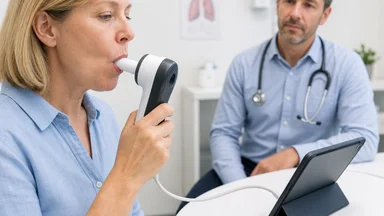
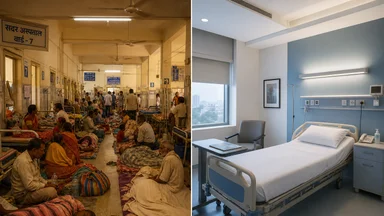
On a Tuesday morning at Chainama Hills Hospital in Lusaka, Dr. Mutale Chisanga sees roughly 100 patients in five hours. Each visit lasts about five minutes. For many patients with schizophrenia or bipolar disorder, the core question is whether their antipsychotic dose is right. Without access to blood-level measurements, Dr. Chisanga doubles the dose of haloperidol based on how the patient appears—whether they are agitated, withdrawn, or reporting side effects. It is a guessing game repeated thousands of times across Zambia, where therapeutic drug monitoring (TDM) machines sit idle, calibrated but unused.
A Psychiatrist’s Guessing Game in Lusaka’s Outpatient Ward
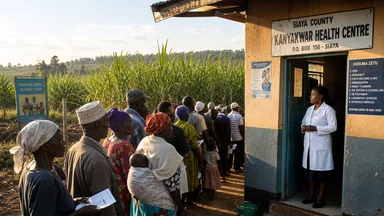
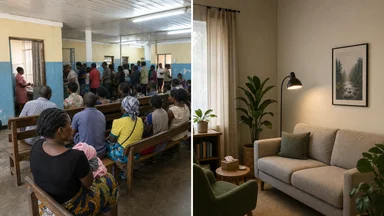
Chainama Hills is Zambia’s main psychiatric referral hospital, serving a population of roughly 3 million in Lusaka province. The outpatient ward sees a steady stream of patients, many of whom travel hours from rural areas. Dr. Chisanga, a consultant psychiatrist with 12 years of experience, says the pressure is relentless. “We have to make decisions quickly. If a patient is relapsing, we increase the dose. If they are sedated, we reduce it. But we don’t know the blood level,” she explains.
The lack of TDM means clinicians rely on observable symptoms and patient reports. But antipsychotics like clozapine have a narrow therapeutic window: too low a dose risks relapse and hospitalization; too high a dose can cause severe sedation, metabolic syndrome, or cardiac arrhythmias. For clozapine, the therapeutic range is roughly 350–600 ng/mL, but without measurement, doctors cannot target it.
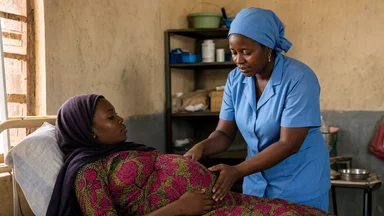
Dr. Chisanga recalls a patient in his late twenties who was stable on oral haloperidol for two years. He suddenly became agitated and was brought in by his family. “We doubled his dose to 20 mg per day. He developed dystonia—painful muscle spasms—and we had to add an anticholinergic. We still don’t know if the original level was low or if he had stopped taking the medication,” she says. The man stayed in hospital for three weeks.
Switching patients to long-acting injectable antipsychotics is another blind process. Without knowing whether the oral dose was adequate, doctors cannot be sure the injectable equivalent is right. “We estimate based on standard conversion tables, but those tables were developed in Western populations,” Dr. Chisanga notes. “We are essentially switching blind.”
Why Therapeutic Drug Monitoring Exists—and Why It Gathers Dust
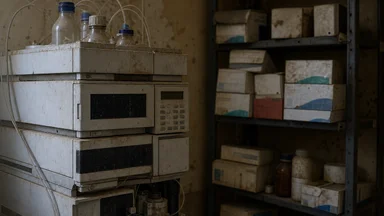
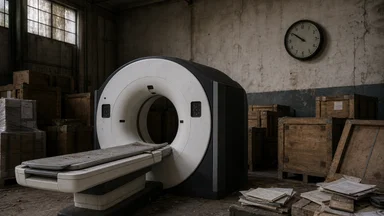
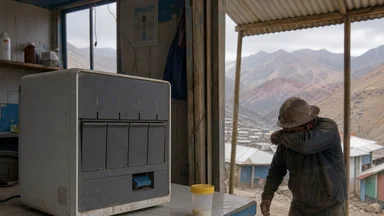
In 2019, Chainama Hills received a Thermo Fisher HPLC system donated by an international NGO. The machine is capable of measuring levels of clozapine, haloperidol, and olanzapine from a blood sample. It was calibrated and briefly used for a research project. Then the reagents expired, and no budget was allocated to replace them.
“The machine is sitting in a locked room,” says laboratory technician Grace Banda, who was trained to operate it. “We have no reagents, no controls, and no budget for a technician salary. The electricity goes out about two days a week, and when it comes back, the machine needs recalibration.” The hospital also lacks a laboratory information system; results are recorded manually in a logbook, and turnaround time for any test that does get processed is six to eight weeks—far too slow for clinical decisions.
Even if reagents were available, the cost per test is prohibitive. A single TDM test using the HPLC system costs roughly US$80 in consumables and labor, more than many patients earn in a month. Zambia’s public health budget allocates about US$40 per capita annually for all health spending, leaving little room for specialized tests.
The situation is not unique to Zambia. Across sub-Saharan Africa, TDM for psychotropics is rare. A 2022 survey of 18 African countries found that only South Africa and Kenya had functional TDM services for clozapine. In most settings, clinicians rely on clinical judgment alone, even though the consequences of inaccurate dosing can be severe.
The Pharmacokinetics of Guessing: What Happens in the Brain
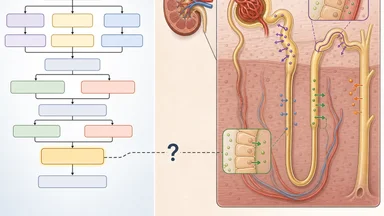
Antipsychotics work by blocking dopamine D2 receptors in the brain. The therapeutic effect requires roughly 60–80% receptor occupancy. Below that, symptoms persist; above that, side effects emerge. But the relationship between dose and blood level is influenced by genetics, diet, liver function, and drug interactions.
Clozapine is metabolized primarily by the cytochrome P450 enzyme CYP1A2, with contributions from CYP3A4 and CYP2D6. Genetic variations in these enzymes are common in African populations. A 2021 study in Zambia found that roughly 30% of participants carried reduced-function alleles for CYP2D6, which could lead to higher blood levels at standard doses. Without TDM, these patients are at risk of toxicity.
“We are using dosing guidelines from Europe and North America, but the metabolism of these drugs can be quite different in African populations,” says Dr. Michael Mwamba, a clinical pharmacologist at the University of Zambia. “Smoking, which induces CYP1A2, is common among patients here, and many are on antiretroviral therapy or tuberculosis treatment that interacts with antipsychotics. We need local data.”
Underdosing is also a concern. A 2020 audit at Chainama Hills found that nearly half of patients on clozapine were receiving doses below the typical therapeutic threshold of 300 mg per day. But without blood levels, doctors cannot know whether those doses are adequate or whether the patients are simply rapid metabolizers. The result is a cycle of relapse, readmission, and dose escalation that wastes resources and prolongs suffering.
A Rare Success: The Malawi Dried Blood Spot Pilot
About 600 kilometers east of Lusaka, at Zomba Central Hospital in Malawi, a different approach is being tested. Since 2023, a pilot program has used dried blood spots (DBS) to measure clozapine levels. A few drops of blood are placed on filter paper, dried, and mailed to a reference laboratory in South Africa. Results return by email within two weeks.
“The DBS method is a game-changer for low-resource settings,” says Dr. Ellen Kamwendo, a psychiatrist leading the pilot. “It costs about US$15 per sample, compared to US$80 for a venous sample, and it does not require a cold chain or expensive equipment.” The pilot has enrolled roughly 200 patients so far, and dosing adjustments were made for about 80% of them based on the results.
One patient, a 34-year-old woman with treatment-resistant schizophrenia, had been on clozapine 400 mg per day for six months with no improvement. Her DBS result showed a level of 250 ng/mL, below the therapeutic range. Her dose was increased to 500 mg, and within four weeks she showed significant improvement. “Without the test, we would have switched to another drug or added a second antipsychotic,” Dr. Kamwendo says. “Now we know she just needed a higher dose.”
The pilot has limitations. The courier network in Malawi is unreliable; samples sometimes take weeks to reach the lab. Turnaround time of two weeks is still too slow for acute situations. And DBS technology has not been validated for all antipsychotics—only clozapine and haloperidol are currently available. Still, the pilot has attracted interest from Zambia and other neighboring countries.
Another patient, a 45-year-old man with bipolar disorder on haloperidol, had been experiencing severe extrapyramidal symptoms at a dose of 15 mg per day. His DBS result showed a level of 18 ng/mL, above the therapeutic range of 5–15 ng/mL. The dose was reduced to 10 mg, and his symptoms resolved within two weeks. “We would have just added an anticholinergic or switched drugs,” Dr. Kamwendo says. “The test saved him from unnecessary polypharmacy.”
When Instinct Becomes Policy: The Dosing Protocols
Zambia’s national treatment guidelines for mental disorders, updated in 2022, acknowledge the lack of TDM. The guidelines recommend “clinical response” as the primary guide for dosing, with no mention of blood levels. For olanzapine, the starting dose is 10 mg per day, with escalation up to 20 mg if needed. For haloperidol, the guidelines suggest 5–15 mg per day but note that higher doses may be used in acute settings.
In practice, some patients receive haloperidol doses as high as 30 mg per day. Polypharmacy is common: many patients are prescribed two antipsychotics simultaneously, often an oral and a long-acting injectable, to manage breakthrough symptoms. “We are using combination therapy because we are not sure either drug is working at the right level,” Dr. Chisanga says. “But this increases the risk of side effects and drug interactions.”
The guidelines also recommend metabolic monitoring—checking blood glucose, lipids, and weight—for patients on second-generation antipsychotics. But at Chainama Hills, glucose is checked in only about 20% of cases. “We do not have enough glucometers or test strips,” Dr. Chisanga explains. “We have to prioritize patients who are clearly symptomatic.” The result is that metabolic syndrome, a common side effect of clozapine and olanzapine, often goes undiagnosed until it becomes severe.
Some clinicians argue that clinical judgment is sufficient for most patients. “In the absence of TDM, we have to rely on what we see,” says Dr. James Phiri, a psychiatrist at the University Teaching Hospital in Lusaka. “We are trained to observe. We can usually tell if a patient is improving or deteriorating.” But he acknowledges that the margin for error is wide. “I have had patients who seemed stable but had very high blood levels, and others who were deteriorating but had low levels. You cannot see a blood level.”
Dr. Phiri also points out that even with TDM, dosing is not always straightforward. “Blood levels are a guide, not a rule. Some patients respond well at levels below the therapeutic range, while others need higher levels. But without any data, we are flying blind in a fog.”
The Cost of Blind Dosing: Readmissions and Side Effects
The consequences of inaccurate dosing are measurable. At Chainama Hills, the readmission rate for patients with schizophrenia is roughly 45% within one year of discharge. Each readmission costs the health system about US$300 in direct care—a significant sum in a country where the annual health budget is about US$40 per capita. For families, the costs include transport, lost wages, and the emotional toll of caring for a relapsed relative.
Side effects are poorly tracked. Tardive dyskinesia, a potentially irreversible movement disorder caused by long-term antipsychotic use, is not systematically monitored. “We do not have a standardized assessment tool,” Dr. Chisanga says. “We only notice it when it becomes severe, and by then it is hard to reverse.” The prevalence of tardive dyskinesia in Zambian patients is unknown, but studies from other African settings suggest rates of 20–30% among patients on first-generation antipsychotics like haloperidol.
Metabolic side effects are similarly undercounted. A 2023 audit at Chainama Hills found that only 15% of patients on clozapine had had their weight recorded in the previous year. “We know that metabolic syndrome is common, but we do not have the data to quantify it,” Dr. Mwamba says. “Without monitoring, we are treating one problem while creating another.”
For patients and families, the lack of precision dosing means a revolving door of hospitalizations. Miriam Banda, whose 28-year-old son has schizophrenia, has brought him to Chainama Hills four times in the past two years. “Each time he stops taking his medicine, he gets sick again. The doctors increase the dose, but he gets side effects and stops again. It is a cycle,” she says. “If they could check his levels, maybe they could find the right dose and he could stay well.”
Another family, the Mwales, have a 32-year-old daughter with bipolar disorder who has been hospitalized six times in three years. “Every admission costs us about 500 kwacha in transport, and we have to take time off work,” says her mother, Esther Mwale. “The doctors keep changing her medicines. We don’t know if any of them are working properly.”
A Low-Cost Fix That No One Has Funded
Researchers at the University of Zambia, in partnership with the Karolinska Institutet in Sweden, are developing point-of-care immunoassay strips for antipsychotic levels. The strips, similar to pregnancy tests, would use a finger-prick blood sample and produce a result in 15 minutes. The target price is US$2–5 per test.
“The technology is feasible,” says Dr. Mwamba, who is leading the project. “We have identified antibodies for clozapine and haloperidol, and we are working on a prototype. The challenge is funding for clinical validation and manufacturing.” A pilot study is planned for 2027, but it requires roughly US$500,000—a sum that no donor has yet committed.
Other low-cost alternatives exist. The dried blood spot method used in Malawi could be scaled up if courier networks improve. Point-of-care devices used for HIV viral load monitoring, such as the Cepheid GeneXpert, could theoretically be adapted for antipsychotic levels, but the cartridges are expensive and the instruments are already stretched thin for TB and HIV testing.
Some argue that investing in mental health infrastructure—including TDM—is not a priority for donors focused on infectious diseases. “HIV and malaria get the bulk of funding,” Dr. Mwamba says. “Mental health is neglected, even though the burden is enormous. We need to advocate for a shift in priorities.”
“We are not asking for a perfect solution,” Dr. Chisanga says. “We just need something better than guessing. A test that costs $5 and gives a result in an hour would transform our practice. We could adjust doses with confidence, reduce side effects, and keep patients out of hospital.” Until that test arrives, the double-dose-by-instinct approach will continue, and the donated HPLC machine will gather dust in a locked room.
This article is for informational purposes only and does not constitute medical advice. Always consult a qualified healthcare provider for medical decisions.