Hypertensive Farm Workers in Rural Kenya Need Daily Meds While Clinics Stock Only Monthly Supplies
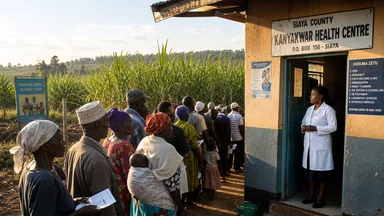
In the sugar belt of Kisumu County, western Kenya, a farm worker wakes before dawn to queue at a rural dispensary. He has hypertension, diagnosed two years ago during a community screening. His clinic stocks only a 30-day supply of amlodipine, the most common first-line antihypertensive. To refill, he must travel eight kilometres on foot or by bicycle, then wait hours to see a nurse. Each refill costs him half a day's wages. Many days, he skips doses to stretch his pills. His blood pressure, when checked, often exceeds 160/100 mmHg.
This scenario repeats across Kenya's rural counties, where hypertension affects roughly one in four adults but control rates remain below 30%. The disconnect between what patients need—daily medication without interruption—and what the system delivers—monthly refills that demand time and money—has become a focus of debate among clinicians, policymakers, and global health experts. At the heart of the disagreement is a seemingly simple question: should clinics switch from monthly to multi-month dispensing for chronic diseases like hypertension?
The Scale of the Problem
Hypertension is the leading risk factor for cardiovascular disease in sub-Saharan Africa. In Kenya, the prevalence among adults is estimated at about 24%—roughly one in four. Yet fewer than one in three of those diagnosed have their blood pressure adequately controlled, according to surveys from the Kenya Ministry of Health. Poor adherence to medication is a major contributor. A 2019 study in rural western Kenya found that only about 40% of hypertensive patients took their medication as prescribed at six months. The most common reason cited was difficulty accessing refills.
For farm workers, the barrier is especially high. Many are employed on sugar, tea, or maize plantations, where workdays start at dawn and end after sunset. Their income depends on daily tasks, and taking time off for a clinic visit means lost wages. Clinics are often located in trading centres, kilometres away from the farms. Public transport is irregular and expensive. A round trip can cost the equivalent of a day's earnings. For a monthly refill, that cost is incurred twelve times a year—a significant burden for a family living on roughly US$ 2–3 a day.
The result is a cycle of poor adherence, uncontrolled blood pressure, and preventable complications: strokes, heart failure, kidney disease. In Kisumu County, the leading cause of adult medical admissions is hypertension-related stroke. Many of these patients had been diagnosed but had stopped taking their medication.
The Case for Multi-Month Dispensing
Multi-month dispensing—providing three to six months of medication at a single visit—has been championed by the World Health Organization for HIV treatment and is now being considered for non-communicable diseases. The rationale is straightforward: fewer clinic visits reduce travel costs and time lost, making it easier for patients to stay on treatment. A pilot program in Kisumu County, run by the local health department with support from a non-governmental organisation, tested three-month dispensing for hypertensive patients in a dozen rural facilities. Preliminary results, shared at a regional NCD conference in 2023, showed that adherence at six months was about 70% among those receiving multi-month supplies, compared to roughly 45% among those on monthly refills. Blood pressure control—defined as below 140/90 mmHg—was also better: about 55% versus 35%.
Patients in the pilot reported high satisfaction. One participant, a mother of three who works on a tea plantation, said she no longer had to choose between buying medicine and feeding her children. Another, an elderly man with diabetes and hypertension, said the three-month supply gave him peace of mind during the rainy season when roads become impassable. For clinicians, the reduced patient load freed up time to see new cases and manage acute conditions.
The economic argument is also compelling. A modelling study by the Kenya Medical Research Institute estimated that switching to three-month dispensing for all hypertensive patients in rural Kenya could reduce annual out-of-pocket costs for patients by roughly 40%. For the health system, the savings from fewer clinic visits, reduced paperwork, and lower rates of complications could offset the increased upfront cost of larger medication stocks. The study calculated that over five years, the approach could be cost-saving if adherence improves by just 10 percentage points.
Concerns and Counter-Arguments
Not everyone is convinced. Some clinicians worry that multi-month dispensing could lead to medication waste if patients change treatment, develop side effects, or fail to return for follow-up. Amlodipine is generally well tolerated, but a small proportion of patients develop ankle oedema or dizziness. If a patient receives a six-month supply and then needs a dose adjustment, the remaining pills may be discarded. In a resource-constrained system, such waste is hard to justify.
Others point to the risk of stock-outs. Rural clinics already struggle to maintain a steady supply of antihypertensives. If they shift to dispensing larger quantities per patient, the demand on the supply chain increases. A single stock-out could leave dozens of patients without medication for months. The pilot in Kisumu addressed this by strengthening supply chain management—using electronic tracking, buffer stocks, and regular resupply—but not all facilities have that capacity. A 2022 audit of health centres in western Kenya found that about 30% had experienced a stock-out of amlodipine in the previous six months.
There is also the question of monitoring. Monthly visits allow clinicians to check blood pressure, adjust treatment, and reinforce lifestyle advice. With multi-month dispensing, patients may go months without any clinical contact. For those with poorly controlled hypertension, this could be dangerous. Proponents argue that the trade-off is acceptable because the alternative—many patients not showing up at all—is worse. They suggest that patients with stable blood pressure, after an initial titration period, could be safely transitioned to multi-month dispensing, while those with uncontrolled hypertension continue monthly follow-up.
Some global health experts caution against a one-size-fits-all approach. Dr. Grace Mwangi, a cardiologist at Kenyatta National Hospital, notes that multi-month dispensing works well for HIV because the drugs are relatively fixed-dose and patients are closely monitored through viral load testing. For hypertension, the medication regimen may need adjustment based on blood pressure readings, renal function, and comorbidities. She advocates for a stratified model: stable patients on a single drug receive three-month supplies; those on two or more drugs, or with comorbidities like diabetes, receive one-month supplies and more frequent check-ups.
What the Evidence Shows
Beyond the Kisumu pilot, evidence from other settings supports multi-month dispensing for hypertension. A randomised trial in South Africa, published in 2020, compared three-month dispensing to monthly dispensing for patients with stable hypertension in primary care clinics. After twelve months, adherence was about 15 percentage points higher in the multi-month group, and blood pressure control was significantly better. No increase in adverse events was observed. The authors concluded that multi-month dispensing is safe and effective for patients whose blood pressure is controlled on a stable regimen.
Similarly, a program in Malawi that provided six-month supplies of antihypertensives to patients in rural health centres reported adherence rates above 80% at one year, compared to baseline rates of around 50% under monthly dispensing. The program also reduced the average number of clinic visits per patient per year from twelve to two, freeing up clinician time for other services.
In Kenya, a retrospective analysis of data from the Kenya Health Information System found that facilities that implemented multi-month dispensing for chronic diseases had 30% lower loss-to-follow-up rates than those that did not. The analysis controlled for facility size, urban-rural location, and staffing levels.
Policy Implications and Next Steps
The debate is not merely academic. In 2024, the Kenya Ministry of Health issued a draft policy on multi-month dispensing for non-communicable diseases, recommending that stable patients receive three-month supplies of antihypertensives and diabetes medications. The policy is under review, with input from county health departments, professional societies, and international partners. Implementation faces several hurdles.
First, the supply chain must be strengthened. The Kenya Medical Supplies Authority (KEMSA) currently procures and distributes medicines to county stores, which then supply individual facilities. For multi-month dispensing to work, KEMSA would need to increase its orders and ensure that facilities have adequate storage space. Some counties have already begun piloting electronic logistics management systems to track consumption and forecast demand.
Second, training for health workers is needed. Nurses and clinical officers must be equipped to identify stable patients, counsel them on self-monitoring, and manage side effects remotely. Community health workers could play a role in follow-up, checking blood pressure at home and referring patients who need adjustment.
Third, patient education is critical. Patients must understand that multi-month dispensing does not mean they can stop checking their blood pressure or ignore symptoms. They need clear instructions on when to return—if they experience dizziness, severe headache, or other warning signs—and how to access care if problems arise.
Fourth, financing must be secured. While multi-month dispensing may save money in the long run, it requires higher upfront expenditure on medicines. Donor funding and insurance schemes, such as the National Hospital Insurance Fund (NHIF), could help cover the initial costs. The NHIF recently expanded its outpatient benefits to include chronic disease medications, but reimbursement rates are low and many rural facilities are not accredited.
Practical Challenges on the Ground
Beyond policy, the realities of rural health facilities pose additional barriers. Many dispensaries lack reliable electricity for refrigeration of certain medications, though amlodipine and enalapril do not require cold storage. However, stock management is often done manually, with paper registers that are prone to errors. A nurse at a facility in Nyando sub-county described how she must count remaining pills each month and submit a requisition form to the county pharmacy, which may take weeks to process. If she dispenses three-month supplies, she would need to forecast demand accurately three months ahead—a difficult task when patient numbers fluctuate with seasonal migration of farm workers.
Another concern is the potential for diversion. Some clinicians worry that patients receiving large quantities of medication might sell them informally. While there is little evidence of widespread diversion for antihypertensives, the risk is not zero. Community health workers who know their patients personally could help mitigate this by conducting home visits and verifying that medication is being used as prescribed.
In addition, the burden on patients is not solely about travel. Many farm workers lack a secure place to store medication. In homes with thatched roofs and mud walls, humidity and pests can damage pill packets. A patient in Ahero reported that his amlodipine tablets became stuck together during the rainy season because the container was not airtight. Multi-month dispensing would require providing patients with appropriate storage solutions, such as sealed plastic containers, which add cost.
A Patient's Perspective
To understand the real-world impact, consider the story of a 52-year-old sugar cane farmer from Muhoroni, a village in Kisumu County. He was diagnosed with hypertension three years ago during a workplace screening. His initial prescription was amlodipine 5 mg daily. He was told to come back every month for a refill. The clinic is a 90-minute walk from his home. He owns a bicycle but often cannot afford the fare for the ferry crossing that shortcuts the route. He missed his refill in the third month because he had to harvest his plot before the rains. By the fourth month, he had stopped taking the pills altogether. His blood pressure, when he finally returned to the clinic after a severe headache, was 180/110 mmHg. The nurse restarted him on amlodipine and added a second drug, enalapril. He was enrolled in a small pilot offering three-month dispensing. Now, he collects his medication every three months. He says he no longer worries about running out. His last reading was 138/86 mmHg.
This story is not unique. Across rural Kenya, thousands of patients face similar barriers. The question is whether the health system can adapt to meet their needs.
Conclusion
The debate over multi-month dispensing for hypertension in rural Kenya reflects a broader tension in global health: the push for standardised, evidence-based protocols versus the need to adapt to local realities. Monthly refills may make sense from a clinical ideal of frequent monitoring, but for a farm worker who must choose between a day's wages and a pill, the ideal is unaffordable. Multi-month dispensing offers a pragmatic solution, backed by emerging evidence that it improves adherence and outcomes without compromising safety—at least for stable patients. The challenge now is to implement it at scale, with the necessary safeguards, and to ensure that the most vulnerable patients are not left behind.
As Kenya moves toward universal health coverage, the management of chronic diseases will only grow in importance. Hypertension alone accounts for a substantial share of outpatient visits and hospitalisations. Getting the dispensing policy right could save thousands of lives and millions of shillings. The farm workers of Kisumu cannot afford to wait another year.